


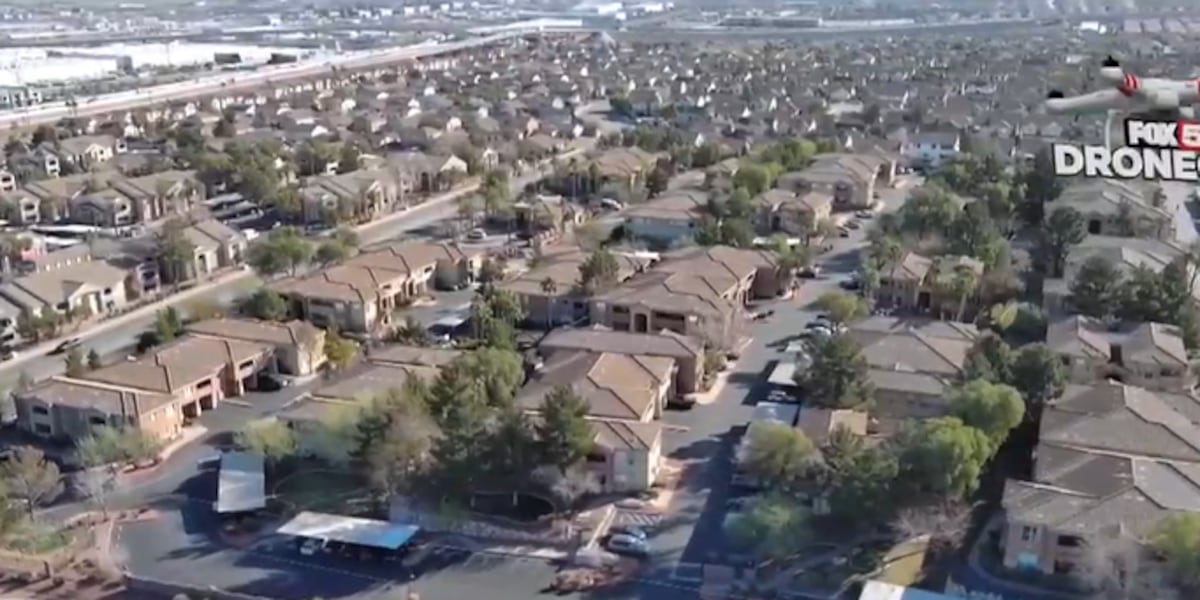

LAS VEGAS (FOX5) — More than six percent of Las Vegas Valley residents can buy a home on their own, according to data from UNLV researchers.
The findings from the Lied Center for Real Estate at UNLV analyze the impact of the Valley’s land shortage on the housing market, prices for homes and rent, and the impact on the growth of businesses and good-paying jobs for residents to improve their quality of life.
Around 88% of land across Clark County is owned by the federal government. Over the past few decades, as the Valley’s population has boomed and vacant land has been developed, the shrinking availability of vacant land has posed challenges for home builders and commercial developers.
FOX5 has reported on the impact of the land shortage on the Valley’s housing and affordable housing crisis, as well as challenges for businesses to move, grow and bring jobs here.
Lied Center for Real Estate Executive Director Shawn McCoy presented the findings at Clark County’s recent Commission meeting.
“It is going to take time, research, and a lot of careful thought to think very strategically about how we grow the city. We have grown up from a very small city to a very big city, and that growth will bring challenges,” McCoy tells FOX5.
“The onus is on us to think very carefully about what we do next, so that we drive the economy into a direction where we’re not just adding housing for housing’s sake, or adding jobs for job’s sake, but adding housing and jobs in a meaningful way where the overall quality of life for Southern Nevadans is better, McCoy said.
The median income to afford a home is $119,012, according to the Lied Research Report.
Only 6.1% of single-income earners throughout all of Southern Nevada can afford a home on their own.
“The average renter in Southern Nevada would need to raise their income by more than $60,000 a year to afford a median priced home,” McCoy said. The average annual income for a renter is $59,120.
The challenge is far easier for dual-income households: 46.6% of Southern Nevadans can achieve the American Dream.
More housing units will put “downward pressure” on prices and rents, McCoy said.
It’s critical that Southern Nevada leaders work to bring the right jobs and industries to help Southern Nevadans improve their quality of life, McCoy said.
“How we attract and cultivate businesses in a way where we’re not just adding jobs… but jobs that bring high-paying earning potential to help the other side of the housing crisis story,” McCoy said.
“When they do take jobs, [it’s] jobs that can translate into upward mobility and high earnings so that Southern Nevadans can experience some relief from what’s going on,” he said.
The amount of income spent on housing impacts the overall quality of life.
“We spend more on housing, it’s more difficult to spend money on recreation. When we are pinched and our pocketbooks are pinched, our residual income is low. It may be more difficult to have the income needed for other things we need to survive and live,” McCoy said.
The study can be viewed here: Lied Center for Real Estate Research
Copyright 2025 KVVU. All rights reserved.