


SUPERIOR, AZ (AZFamily) — A report has revealed new details in a helicopter crash that claimed the lives of four family members near Superior earlier this month.
The National Transportation Safety Board (NTSB) released on Wednesday its preliminary report regarding the helicopter’s collision with a slackline, including new information that a second helicopter came dangerously close to the same line about an hour after the crash.
On Jan. 2, an MD 369FF helicopter crashed into a recreational slackline that was strung across the mountain range near Telegraph Canyon, south of Superior. The pilot, 59-year-old David McCarty, and three passengers, Katelyn Heideman, Rachel McCarty and Faith McCarty, all died in the wreck. All three girls were in their 20s, according to the Pinal County Sheriff’s Office.
Slacklining, as explained in the report, is a sport in which a person balances on a 1 to 3-inch-wide piece of webbing suspended between two points. Another version of the sport, called highlining, involves rigging a longer slackline at higher altitudes above terrain. In highlining, the participant attaches their safety harness to a backup line, which is loosely attached to the mainline.
Pinal County officials previously said the slackline was over half a mile long.
The NTSB report says that on Dec. 26, just a week before the crash, a witness and some friends anchored a slackline near the accident site. They raised a signalization line with 10 LED lights and 5 windsocks, which serve as a visual aid to track wind direction and speed.
NTSB officials said the group then used nylon lines to draw the mainline and backup lines between the anchors. Officials estimate that the lines were about 600 feet above the ground at their highest point.
The following photo shows the diagram of the slackline layout:
Four days later, the group lowered the mainline and backup lines due to predicted high winds and rain. However, the morning of the accident, the group decided to raise the lines as the weather improved.
Officials say the mainline and backup line were drawn halfway when they heard the helicopter approach. The helicopter briefly disappeared behind the mountain terrain, but once it reappeared, it was flying directly toward a set of lines.
The report says the helicopter’s tail boom, the piece connecting the main body to the tail rotor, separated as it struck the slackline. The tail boom and fuselage, the main body of the helicopter, hit the terrain between 150 and 350 feet.
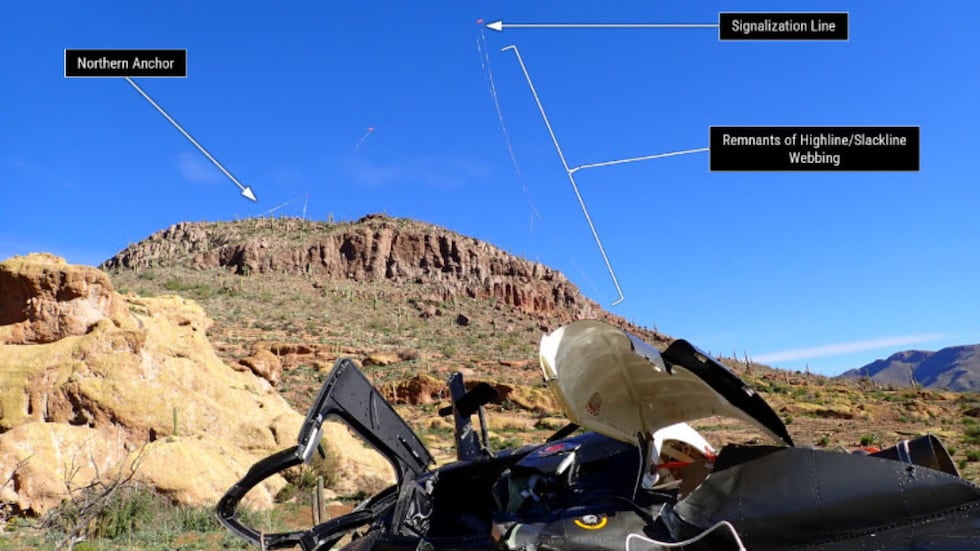
Just an hour after the crash, a second helicopter flew a similar flight path and went roughly 10 feet under the signalization line. Officials say the stabilization line was still suspended in the air, along with pieces of the slackline webbing.
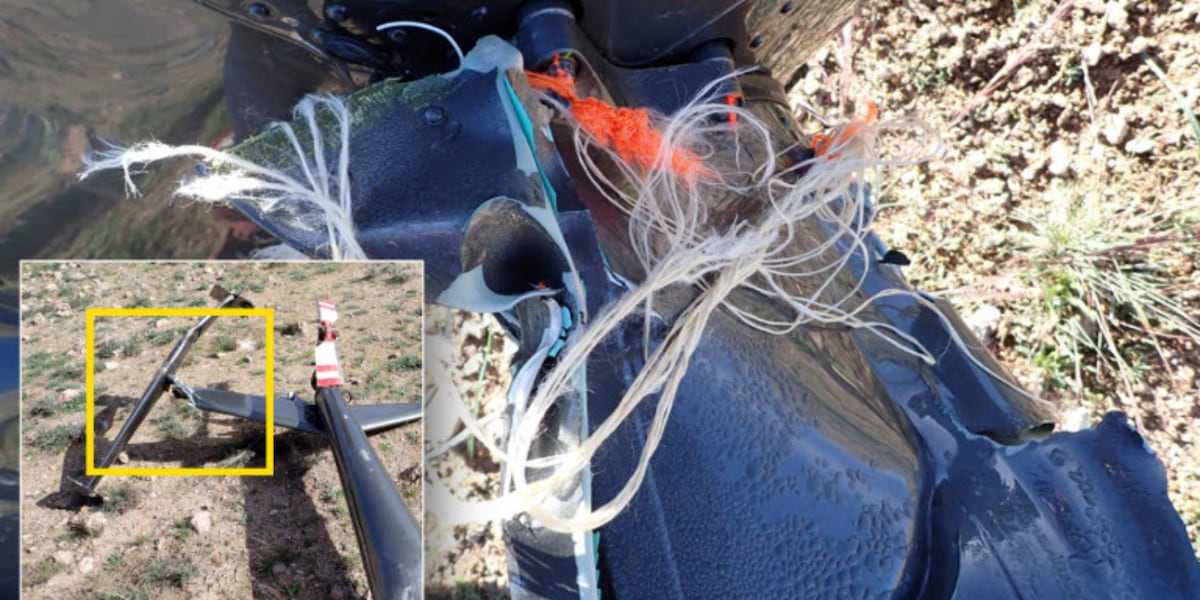
An examination revealed that pieces of the slackline webbing were caught in the helicopter’s vertical stabilizer, otherwise known as the tail fin. Some end caps on the horizontal stabilizer were sheared off, and marks similar to the slackline webbing were embedded in the paint and rotor blades.
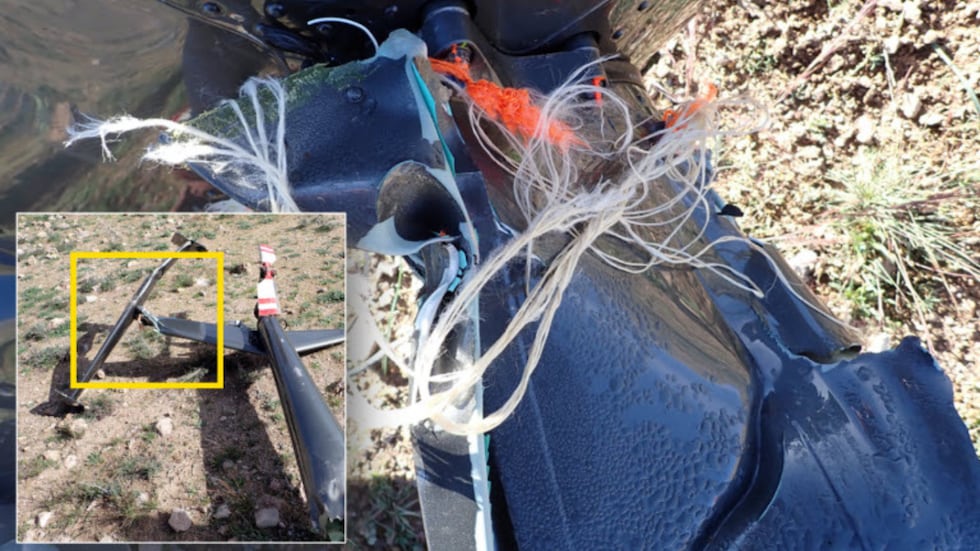
The report reveals that the helicopter was equipped with a wire-strike protection system consisting of cutters at the top and bottom of the fuselage. However, the cutters missed the slackline.
NTSB officials say a friend of the slackliners filed a Notice to Airmen (NOTAM) on Dec. 21, alerting pilots to the “tight rope” roughly three miles south of Superior Municipal Airport. The report shows that the notice was active between Dec. 26 and Jan. 6.
The wreckage and parts of the slackline were gathered for further examination by officials.
The NTSB says the report released on Wednesday is preliminary and subject. The final report is expected to be released within 1 to 2 years.
See a spelling or grammatical error in our story? Please click here to report it.
Do you have a photo or video of a breaking news story? Send it to us here with a brief description.
Copyright 2026 KTVK/KPHO. All rights reserved.