

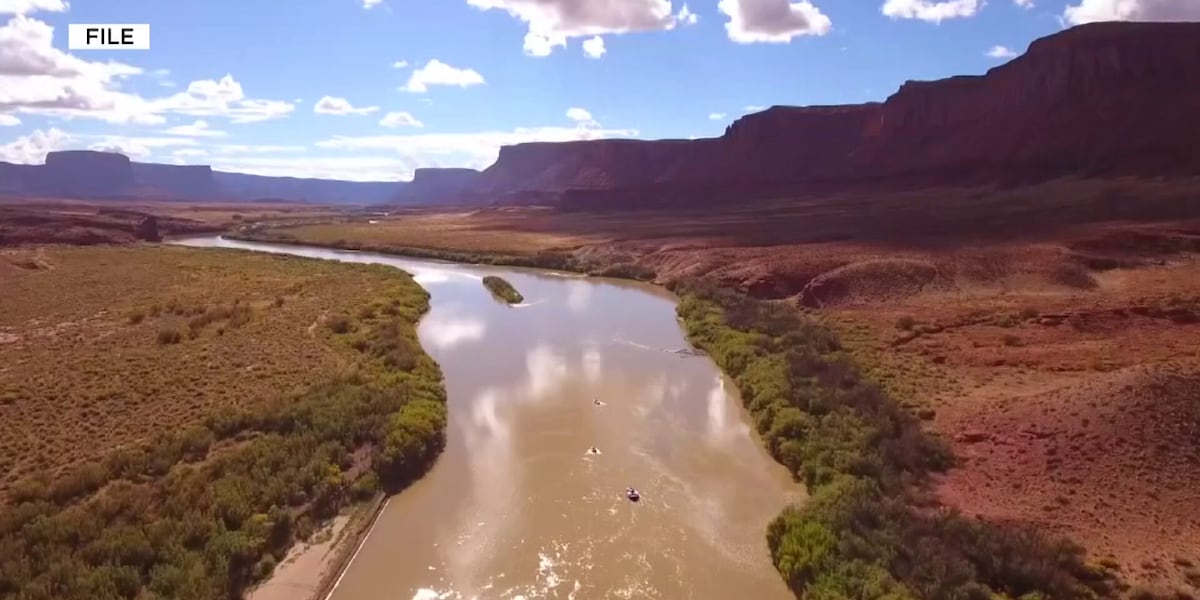

LAS VEGAS (FOX5) — Nevada has produced a stopgap proposal for short-term Colorado River management as negotiations among the seven basin states remain stalled and deadlines have passed without a deal.
The plan comes after Nevada negotiators sent letters to the Bureau of Reclamation following the close of a public comment period, touting the state’s conservation record and outlining a new approach to managing the river during a megadrought. The proposal was put forward by the Southern Nevada Water Authority and the Colorado River Commission of Nevada.
What the Nevada plan includes
Under the proposal, the Lower Basin states of Nevada, California and Arizona would agree to conserve 1.25 million acre-feet of water in both 2027 and 2028.
The plan also places greater responsibility on upstream reservoirs for managing downstream flows — a shift that would mean lower storage levels for retention facilities in Colorado and Utah, and would reduce pressure on Lake Powell and Lake Mead, while ensuring water reaches Nevada, Arizona, California and Mexico.
Nevada’s proposal also abandons the pursuit of a long-term river strategy in favor of six-month reevaluations, held at the beginning and middle of each water year.
Upper basin pushback
Upper Basin states have resisted calls to conserve more, pushing instead for the Lower Basin to bear the burden. Kyle Roerink, executive director of the Great Basin Water Network, said that position conflicts with existing law and is inequitable.
“There were a lot of things in place before all those upstream dams were built,” Roerink said. “And those obligations to the lower basin cannot be ignored. The need to get water downstream in a fair and equitable way, even in times of shortage, cannot be ignored just so the upper basin states can keep their reservoirs full.”
“Just because the upper basin states want to keep their reservoirs full doesn’t mean Nevada should suffer in an unequitable way,” Roerink added.
Why short-term planning
Roerink said the shift away from long-term planning reflects changing conditions on the ground.
“We have drier soils, changing evaporation times and runoff times and patterns,” Roerink said. “So we’re dealing with a changing world. And this idea that we can do things like we used to really needs to change as well.”
He said more frequent check-ins are better suited to current conditions.
“I think that’s why the yearly convenings, the somewhat more quarterly convenings and more monthly convenings, is probably a better thing for real-time management in a world where we can’t rely on our 20th century notions about how that world works anymore,” Roerink said.
California signals support
So far, California Water Commissioner J.B. Hamby is the only official from another state to publicly back the Nevada proposal.
“Nevada has once again shown its leadership and prolific ability to find practical, middle-ground solutions to the Colorado River’s most complicated challenges,” Hamby said in a statement to FOX5. “With California’s support, Nevada can now count to two, and we hope to continue building momentum and expanding that common-sense coalition. Continuing to cling to chimeras of expanding current use won’t get us there.I believe every state that is willing to do what’s right for the river will ultimately sign on. We hope we can count to seven.”
Copyright 2026 KVVU. All rights reserved.