




LAS VEGAS (FOX5) — For decades, the federal government considered marijuana as dangerous a drug as heroin.
That changed Thursday when the acting U.S. Attorney General Todd Blanchard signed an order reclassifying state-licensed cannabis products from schedule I to a far less regulated schedule III.
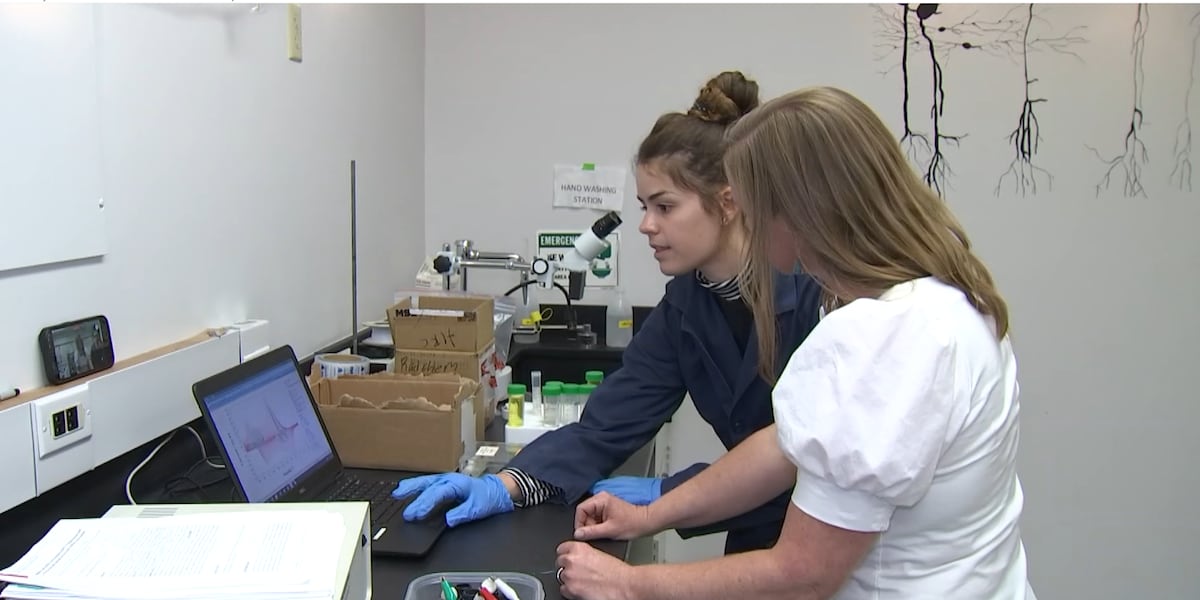
The order does not legalize marijuana for medical or recreational use under federal law, but it does ease some barriers to cannabis research. And that came as very good news for a pair of UNLV scientists.
“It was, it was like, it was like we got a brand new car, but we didn’t know how to drive it. And we’re going to see where it’s going to go. We’re, we’re super excited for the road trip,” said Dr. Rochelle Hines, an Associate Professor of Neuroscience at UNLV.
A new onramp just opened on Dr. Rochelle Hines’ scientific journey of discovery.
“We are not pro-cannabis or anti-cannabis.We’re pro-facts. We want to understand,” she tells FOX5.
Hines and her husband, Dr. Justin Hines, have spent years hunting for the truth about marijuana and its untapped medical potential – but scheduling did present some roadblocks to their research.
“We had to work really hard, because a lot of people were like, this isn’t medicine. This is only bad. There’s only bad components in this. So, what this will do now is open up money for research, because it’ll say, look, these do have potential as therapeutics. They’re no longer classified as evil components,” he said.
Anecdotal evidence suggests cannabis holds promise for those suffering from epilepsy, particularly for children.
The Hines want to know why.
“A lot of us are thinking about its recreational and psychoactive components. But it’s actually a very complex mixture with hundreds of different ingredients. And some of these other components actually have incredible value in terms of modulating the brain’s activity,” says Rochelle.
“So now that we’re unlocking the ability to research on these compounds, we can’t even imagine what we’re going to get next. And I think that’s super exciting,” shares Justin. “Whole new groups of seizure disorder drugs, whole new groups of drugs for inflammation. It’s truly exciting.”
Excitement aside, the scientists also sees a pressing necessity to better understand a substance that’s already a part of so many people’s lives.
“These are powerful medicines, right? They’re truly powerful medicines, says Justin. “This is strong medicine. It varies from plant to plant. And it should be treated like strong medicine.”
Rochelle agrees.
“We’re actually running a giant human experiment right now, just in the general public, because we’re making cannabis strains that are more potent all the time. And I don’t think we fully understand the ramifications of that.”
It’s still unclear precisely how and when the change in classification will impact marijuana research. Hearings on the scheduling change will begin in late June.
Copyright 2026 KVVU. All rights reserved.