

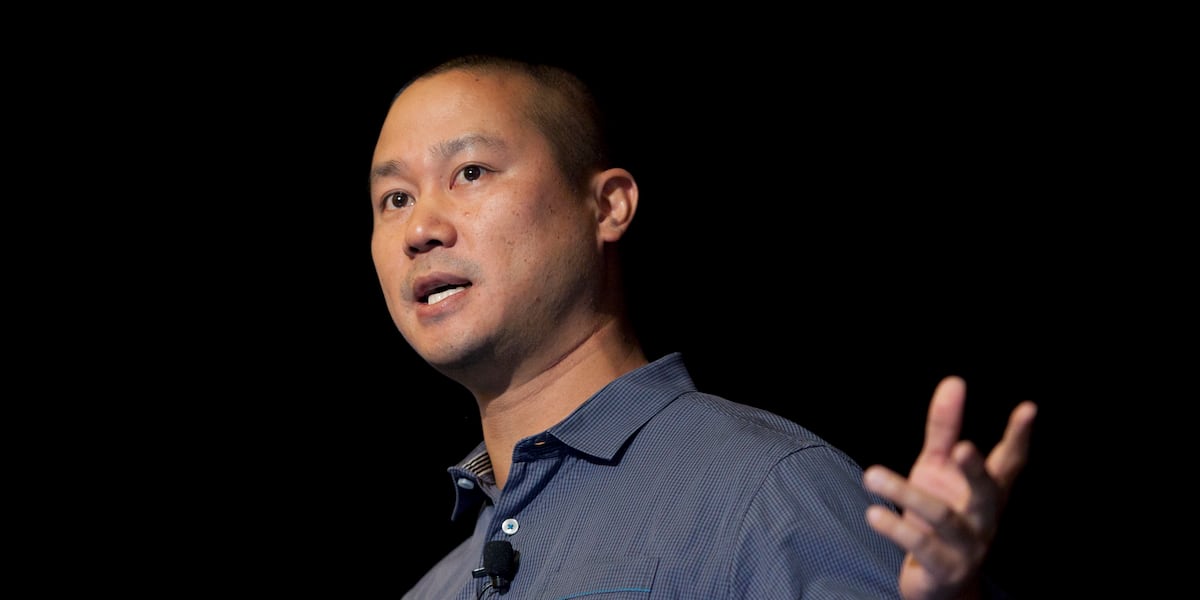

LAS VEGAS (FOX5) — A newly filed legal response in a high-profile estate dispute over Tony Hsieh claims a purported 2015 will contains multiple physical anomalies, suggesting the document was not executed as a single, unified agreement.
The response, filed on behalf of Richard Hsieh on Aug. 21, 2026, directly challenges a previous forensic report issued by Gerald M. LaPorte. While three experts involved in the case agree that chemical ink dating (specifically testing 2-PE levels) is inconclusive, Hsieh’s experts — Larry F. Stewart and Erich Speckin — identified four major physical inconsistencies they claim the Special Master overlooked.
Mismatched inks and different printing devices
According to the filing, Thin Layer Chromatography (TLC) testing revealed that three distinct ink formulations were used across 12 signatures spanning pages 6 and 7 of the document. This contradicts the Special Master’s claim that a single matching ink was used throughout, with experts noting that such variation is highly unusual for documents signed at the same time.
PREVIOUS: Court hearing set for newly discovered will years after Las Vegas tech mogul’s death
Additionally, examiners analyzing the document under magnification found that page 7 was printed using a different device, or at a different time and setting, than page 6. The conclusion was drawn after analyzing toner morphology and dot patterns on the paper, the filing says.
Chemically distinct paper and unexpected indentations
The filing also points to physical differences in the paper itself. Spectral, UV fluorescence, and chemical paper-blank testing showed that page 7 is chemically and optically different from page 6.
Perhaps the most unusual finding involved an Electrostatic Detection Apparatus (ESDA) analysis. The test revealed a physical impression of witness Meer Gohram’s page 6 signature indented directly onto page 2—a non-signature body page. Experts say this indicates page 2 was positioned directly beneath page 6 when it was signed. Surprisingly, no impressions from the page 6 signatures were found on page 7, where they would normally be expected if the document was stacked and executed in order.
Hsieh’s filing concludes that these findings indicate the pages of the purported 2015 will were not executed as a single, unified document in the ordinary course of business, raising serious concerns regarding its overall authenticity.
Copyright 2026 KVVU. All rights reserved.