


LAS VEGAS (FOX5) — No deal—that’s the word from Nevada’s top water negotiator one day before a government-set deadline to reach an agreement.
John Entsminger, general manager of the Southern Nevada Water Authority, said the lower basin states don’t feel the upper basin is making enough concessions. He said the upper basin wants too much in exchange for expanded conservation.
“The river doesn’t care. The river’s going to give us the amount of water the river’s going to give us,” Entsminger said. “So, if we want to be the humans with our hands on the steering wheels, then we should get to work and get a deal done here.”
Federal options rejected
The federal government has offered the states five different options for future river management. Entsminger said the states like none of them, but if they cannot reach an agreement among themselves, they’ll have to live with whichever one the Bureau of Reclamation chooses.
Litigation looms
As time passes, some believe it becomes more likely that one or more states will turn to the courts to end the conservation dispute.
Kyle Roerink, executive director of the Great Basin Water Network, said legal action is already being discussed openly.
“We have the governor of Arizona in very serious ways talking about litigation in newspapers. We have the top water official in Colorado talking about acrimony being a reality in the future,” Roerink said.
Upper vs. Lower Basin divide
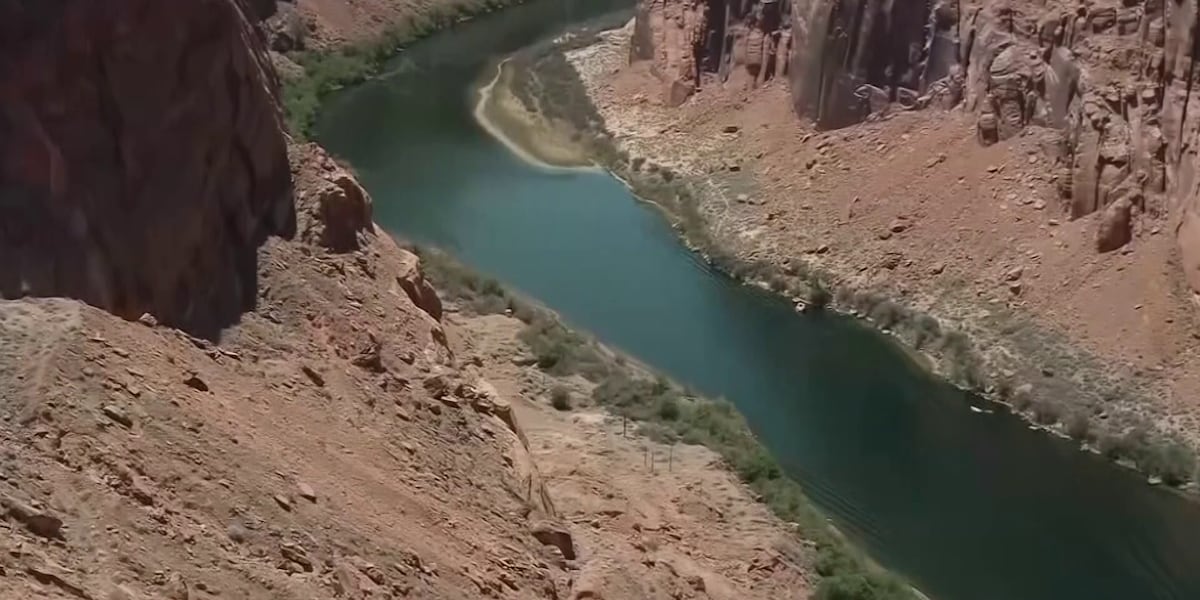
The dispute centers on a battle between the “haves” and “have nots.” The upper basin states have the water while the lower basin states have to rely on water that flows down from the mountains. A megadrought has made that water far less plentiful.
The Bureau of Reclamation wants all states to conserve, but the upper basin appears reluctant to agree to any cuts.
Legal precedent concerns
Tom Romero, a UNLV law professor, called litigation “the nuclear option.”
“The only precedent we have is when Arizona sued California,” Romero said.
Arizona sued to claim its share of Colorado River water in 1952. The case took 11 years to work through the courts.
“If litigation were to happen now, you’re not just talking about a dispute between two states. Now you’re talking about a dispute between seven states,” Romero said.
Experts say such complex litigation could take decades, and the result may not be ideal.
“If you do ultimately leave this in the hands of the Supreme Court, they’re going to divide up the river in ways that might not make sense for anyone,” Romero said.
Worsening conditions
The amount of water available continues to recede. Roerink said the western United States faces what could be the driest winter on record in many parts.
“This summer, if these arid trends continue, this summer will be an unprecedented period of aridity that impacts throughout the western United States,” Roerink said.
Despite the grim outlook, Roerink said the severe conditions could force states to reach a realistic deal. While Entsminger said a choice ultimately has to be made.
“There’s no easy way out of this,” Entsminger said. “The truth of the matter is one set of humans or another will make a decision here, be it the seven governor’s representatives, be it Congress, be it the courts.”
Copyright 2026 KVVU. All rights reserved.