


LAS VEGAS (FOX5) — The Clark County Commission approved a 10-year extension of a program that uses a portion of the county’s fuel tax to pay for road construction and other key infrastructure projects.
City leaders from across the valley urged the county commission to keep the funding in place, and the commission ultimately agreed.
Las Vegas Mayor Shelley Berkley joined representatives from Henderson, North Las Vegas and Boulder City, as well as the deputy director of operations for the Nevada Department of Transportation, in calling for the renewal of the Fuel Revenue Indexing in Clark County.
“I am here today to express my strong support for continuing the fuel revenue indexing,” Berkley said. “Thanks to the FRI, millions of dollars have been invested in critical infrastructure projects throughout Southern Nevada, including right here in the city of Las Vegas.”
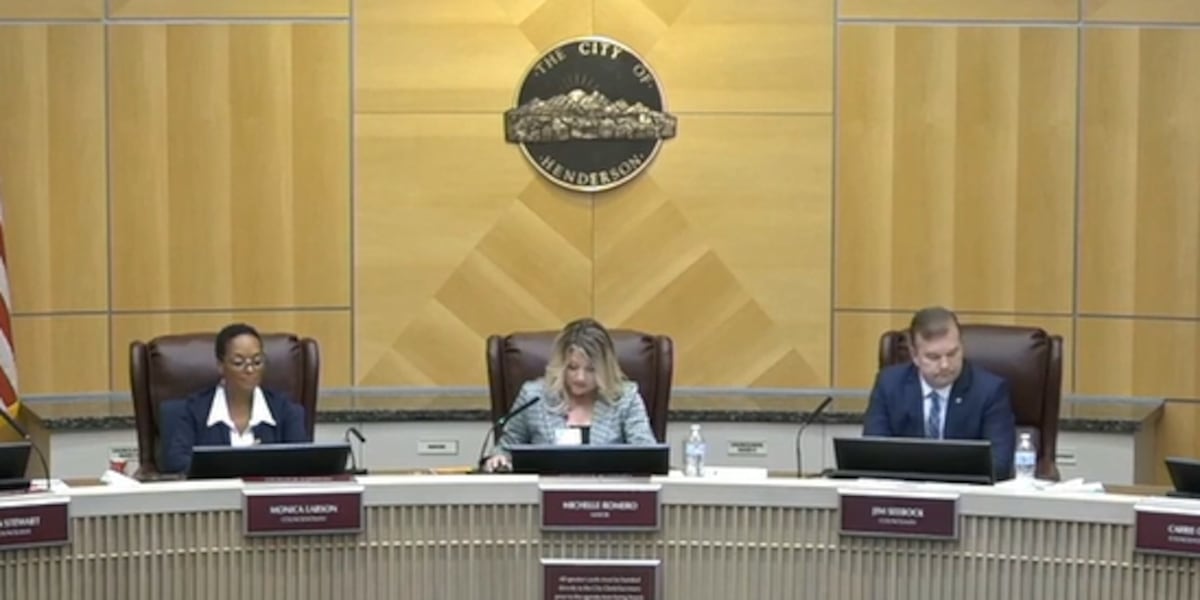
Henderson City Councilman Jim Siebach said the city has seen the program’s benefits firsthand.
“In Henderson, we’ve seen firsthand how FRI funding transforms our roadways and enhances public safety,” Siebach said. “The Reimagine Boulder Highway project is a perfect example of that. Thanks to FRI, we’ve invested over $40 million on Boulder Highway from Wagon Wheel to Tulip Falls Drive, adding center-running bus, rapid transit lanes, enhanced stations, dual cycle tracks and traffic signals, and street lighting upgrades that make the corridor safer and more accessible for everyone.”
North Las Vegas City Council Member Isaac Barone highlighted the program’s broader impact across the region.
“Since its inception, FRI has generated over $1 billion, supporting 727 projects, 24,000 jobs, and $3 billion in transportation investments that keep our region moving safely and efficiently,” Barone said. “North Las Vegas is still one of the fastest-growing cities in the region, and with that growth comes the need for reliable, long-term transportation funding.”
Boulder City Attorney Brittany Walker cited the I-11 Boulder City Bypass as a major success story.
“Boulder City has seen firsthand the impact of FRI on our community,” Walker said. “On our regional connectivity, one of the most significant examples is the I-11 Boulder City Bypass, completed in 2018 with $37 million of FRI funds. This 12.5-mile freeway connects the 515 and US-95, saving drivers up to 30 minutes of travel time during busy weekends and improving freight movement and safety between Henderson and the Hoover Dam area.”
Local projects benefit from FRI funding
Barone cited specific North Las Vegas projects funded through the program.
“A great example of this is the $105 million in North Las Vegas 5th Street roadway improvements, which include upgrading and modernizing traffic signals to improve communication between the intersections, improve traffic flow, and to reduce congestion,” he said. “Another important project is the Las Vegas Boulevard from Tonopah Avenue to Cary Avenue project, which is about to start construction. Improvements are going to include pavement reconstruction, upgraded street lighting, pedestrian safety, and traffic signal improvements. FRI makes projects like these possible.”
Program generates millions for infrastructure
“NDOT expects future revenues to be between $50 million to $55 million per year, with a modest annual increase,” said Mario Gomez, deputy director of operations and maintenance for NDOT. “The revenues would enable us to complete significant projects in Clark County, including the I-11 Clark County 215 Henderson Interchange.”
The Nevada Department of Transportation says it has received about $180 million from Fuel Revenue Indexing since 2017. It has used the funding for interchange projects, as well as for signage, lighting and safety upgrades.
The Regional Transportation Commission also gets money for its projects from FRI. The program diverts a portion of county fuel taxes to the commission for use with major infrastructure plans, like the Reimagine Boulder Highway project.
The current program expires in 2026. Commissioners decided to keep it in place for the next ten years. Then, in November of 2036, voters will decide if they want to make the funding permanent.
Copyright 2025 KVVU. All rights reserved.