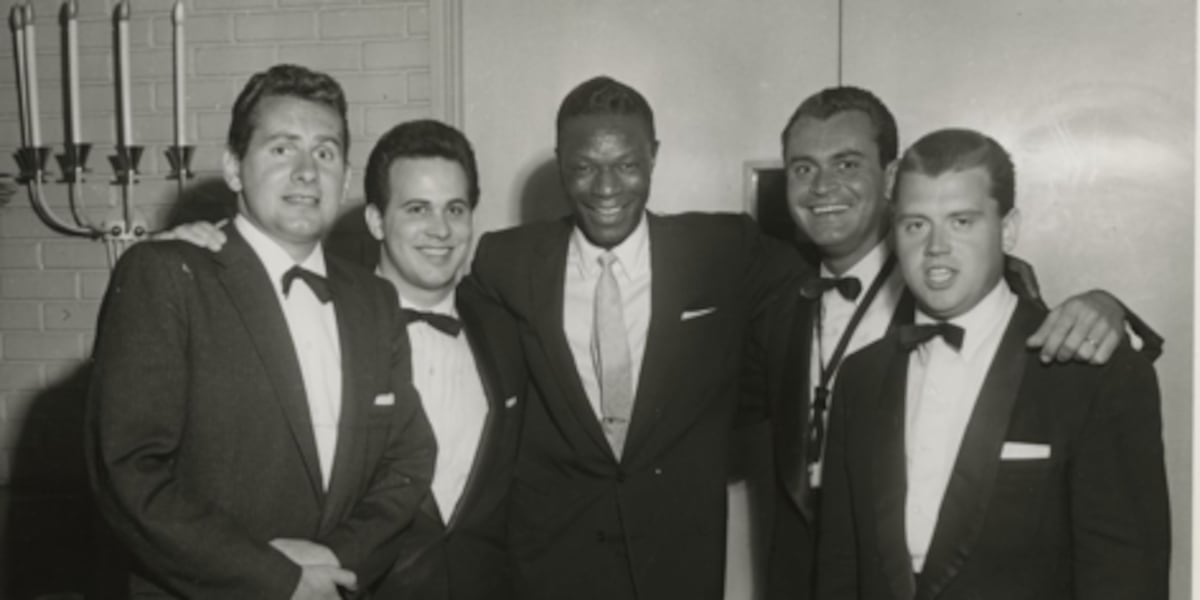



LAS VEGAS (FOX5) — Black entertainers like Sammy Davis Jr., Nat King Cole, Pearl Bailey, and Lena Horne held contracts with major casinos on the Las Vegas Strip as early as the 1940s and ’50s — but were barred from staying, dining, or gambling at the same properties where they performed.
That changed in 1960, following a direct threat from Las Vegas’s NAACP president to shut down the Strip with a protest march.
A city built on exclusion
During World War II, Black families began migrating to Las Vegas as the city experienced a population and economic boom. Black workers could hold back-of-house positions at casinos, and Black artists performed on Strip stages — but they were required to live in boarding houses on the city’s West Side.
“They have contracts on the Las Vegas Strip, but they cannot live. So, they have to live in boarding houses on the West Side,” said historian Claytee White.
White noted the broader context of that era: “Rather than going to Chicago, going to New York, now people are coming west.”
The threat that forced a meeting
In the spring of 1960, the NAACP president, James B. MacMillan, sent a letter to the Las Vegas mayor threatening a march on the Strip on a Saturday night if casinos were not integrated.
“He threatens a march on the Las Vegas Strip on a Saturday night,” White said.
The threat prompted casino leadership to convene at the Moulin Rouge.
“They have this meeting at the Moulin Rouge on a Saturday morning, March 26th,” White said. “At the end of all of that, the mob decides that we’re going to integrate the casinos. We don’t want that negative publicity in this city with all of these entertainers coming from all over the world.”
The agreement and its limits
The resulting deal — now known as the Moulin Rouge Agreement — permitted Black families to patronize Strip casinos. But employment access remained restricted.
“So, you can go in and spend your money. But you couldn’t make any money. Couldn’t make any money,” White said.
It was not until the 1971 Consent Decree — a landmark federal court case, United States v. Nevada Resort Association — that Las Vegas hotel-casinos and unions were forced to end discriminatory hiring, mandating that 12% of all jobs — including high-paying, public-facing, and management roles — be filled by Black workers.
Preserving the history
UNLV’s Oral History Research Center documents Las Vegas’s Black history and is open to the public.
White has also launched her own business, History in Living Color, which works to preserve important Nevadan history.
“We need to know African American achievements and accomplishments,” White said. “We need to know it so that no one can take it away from us.”
Copyright 2026 KVVU. All rights reserved.