


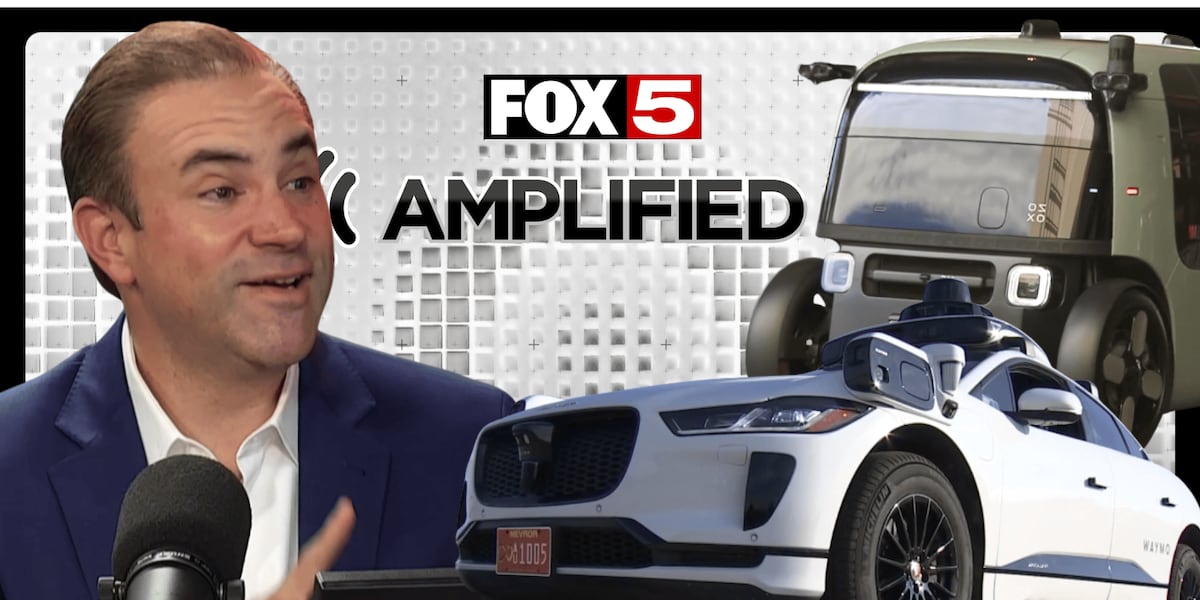

LAS VEGAS (FOX5) — Autonomous vehicles are becoming a more common sight on the Las Vegas Strip as two companies test and deploy self-driving technology for tourists and residents.
Zoox currently operates small, square autonomous vehicles that provide free rides between Strip casinos, while Waymo continues testing its Jaguar electric vehicles throughout the Las Vegas Valley ahead of a planned summer launch.
Zoox offers free rides between casinos
Zoox offers free rides between casinos and attractions such as AREA15 using a mobile app booking system. The company recently added the Wynn as its newest stop.
“Right now, they’re actually free for guests to go in and be part of the experience,” said FOX5 reporter Sophia Bruinsma, who rode in a Zoox vehicle. “But unfortunately, it’s just within the Strip, and mostly just from casino to casino at this point.”
The vehicles seat four passengers facing each other, allowing conversation during rides. Passengers can eat and drink, including alcohol, during trips.
“It felt very similar to a human driver. Very smooth,” Bruinsma said. “And the overall experience was like very relaxing. There was like music, ambient music. You can eat and drink. There’s no driver. So you have that privacy as well.”
Waymo plans valley-wide service
Waymo, which already operates in Phoenix, San Francisco, parts of Los Angeles and Austin, plans to launch service throughout the Las Vegas Valley by summer 2025. The company has delivered 127 million miles with its vehicles across all markets.
“They’ll go from Boulder City to Summerlin and kind of everywhere in between,” said FOX5 reporter Joe Vigil, who interviewed Waymo representatives.
Unlike Zoox’s limited casino-to-casino routes, Waymo vehicles are expected to pick up passengers across the valley, similar to traditional ride-sharing services.
The company uses Jaguar electric SUVs equipped with cameras, radar and LIDAR technology that can detect objects up to 1,000 feet away and react in milliseconds.
Technology aims to reduce human error
Both companies emphasize safety advantages over human drivers, citing elimination of distractions, emotions and impaired driving.
“No driver, not on the cell phone, not tuning the radio, not listening to music, not being distracted by kids or the dog in the backseat, getting anxious,” Vigil said, describing Waymo’s pitch.
The vehicles use LIDAR technology, which employs laser light to detect objects that might be invisible to human drivers, such as pedestrians in dark clothing on unlit streets.
Challenges remain during testing phase
Both companies acknowledge ongoing challenges as the technology develops. Zoox experienced an incident near Treasure Island where a vehicle became stuck in an intersection, requiring remote assistance to resolve.
“Eventually, they say that they got it out by themselves,” Bruinsma said. “And I asked if there were people in it, and they said they don’t believe that there were people in it at that time.”
Waymo representatives said rear-end collisions at traffic lights represent one of the more common accident types involving their vehicles, typically when other drivers strike the stationary autonomous vehicles.
Both companies continue testing and refining their technology before full deployment, with safety guiding their timelines rather than commercial pressures.
Copyright 2026 KVVU. All rights reserved.