


LAS VEGAS (FOX5) — Mosquitos’ are becoming harder to tackle in Southern Nevada.
“Once it adapts its explosive,” said Dr. Louisa Messenger as she showed us a timelapse of mosquito activity in Southern Nevada. The time lapse was from 2019- present.
Messenger, is a Assistant Professor at UNLV’s School of Public Health, as well as the director at UNLV’s Parasitology & Vector Biology Laboratory.
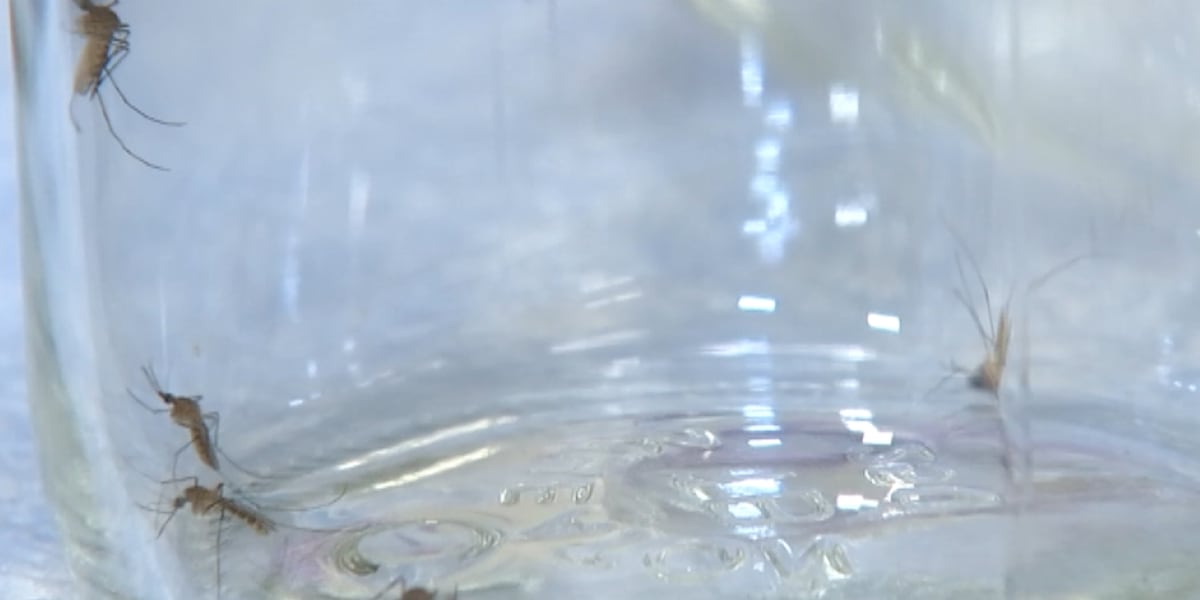
She showed us different netted cages with mosquitos that came in from the Center for Disease Control.
Culex quinquefasciatus can carry west nile virus , aedes aegypti can spread dengue, zika, chikungunya and yellow fever where as anopheles coluzzii can carry malaria.
However, the lab is able to determine if a mosquito comes is carrying one of the viruses.
We do collect wild mosquitoes from Las Vegas what we will do is we will pull them, kill them, test them with a PCR that’s designed to detect the presence or absence of the pathogen.
According to Messenger, and Southern Nevada Health District there have been no cases of west nile virus in Southern Nevada this year.
However, in 2024 there were 26 cases – with 14 of them being neuroinvasive. 388 pools also tested positive for the virus.
Messenger tells FOX5, all it takes is for a mosquito to bite an already infected person then bite someone else 2-3 days later to spread the pathogen.
“We do have 50 million visitors through the year,” Messenger said. “It takes just one of us to come in infected and spread it.”
However, there is a bigger issue.
The lab has found mosquitos found here are not immune to the everyday pesticides and insecticides being used.
“Even at 100 times the dose at 24 hours they aren’t dying, they are supposed to die within a few minutes,” said researcher Trishan Wickramasinghe.
Wickramasinghe is leading this particular study, and goes out every day to collect new mosquitos.
” So the mosquitos that survive they will go on and produce mosquitos that are resistant to insecticides and it keeps making the insecticide resistance worse and worse,” he said.
Wickramasinghe said through his findings, Summerlin has the highest level of mosquito activity because of the water in the golf courses, which includes man lade lakes.
His focus is trying to figure out which exact dose and level of concentration will kill the mosquitos, but also be safe for pets and humans.
The team at the lab will send their findings to local agencies who work to mitigate mosquito population.
They also have a survey out for residents to take to give their input on mosquito activity in Southern Nevada. The survey is in English and Spanish.
Have a story idea or tip? You can reach Victoria at [email protected]
Copyright 2025 KVVU. All rights reserved.