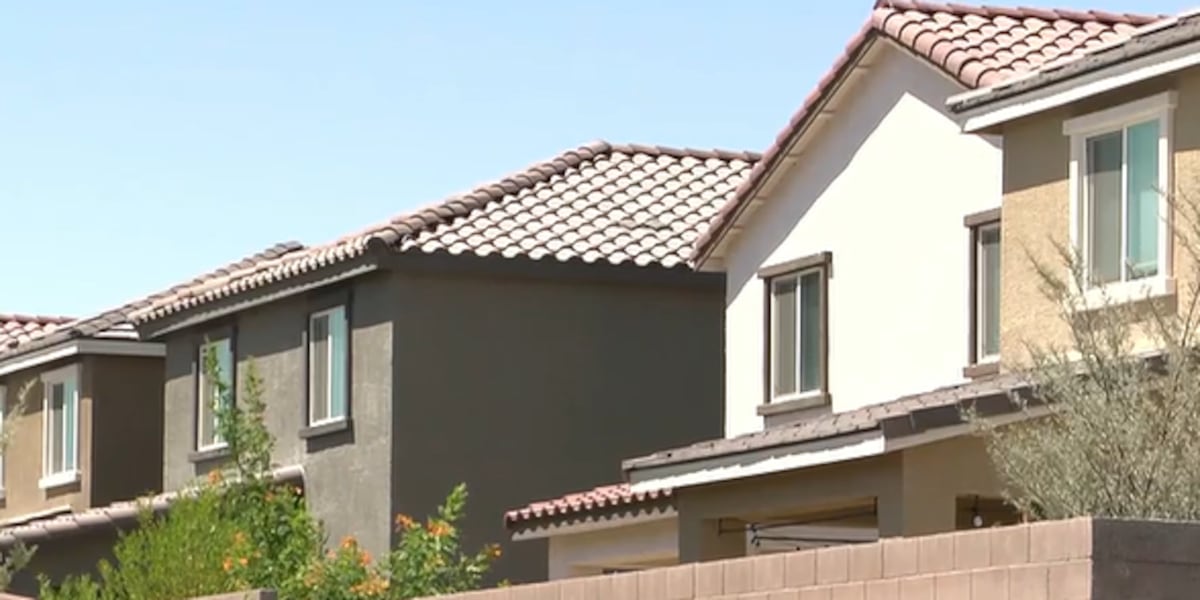




LAS VEGAS (FOX5) — Across Nevada, more than 3,700 homeowner associations govern hundreds of thousands of residential properties.
While state law tightly regulates how much an association can penalize a resident for everyday infractions, a longstanding loophole regarding “health, safety, and welfare” violations is sparking fresh debate between regulators and homeowners.
Under Nevada Revised Statutes Chapter 116, standard HOA fines are capped at $100 per violation, up to a cumulative maximum of $1,000 per hearing.
However, if an executive board determines an infraction poses an imminent threat to the “health, safety, or welfare” (HSW) of the community, those statutory limits can disappear.
In those cases, state law allows the executive board to set the fine amount directly.
The problem, critics say, is that Nevada law has never clearly defined what qualifies as a genuine health, safety, or welfare emergency.
Now, state regulators are stepping in.
Following months of public workshops, the Nevada Commission for Common-Interest Communities and Condominium Hotels recently approved proposed administrative regulations under LCB File No. R091-25. The measure aims to establish clearer criteria for what constitutes an imminent threat, but the effort has drawn sharp reactions from both sides of the neighborhood fence.
Property managers push for clarity
For community association managers, establishing formal guidelines is a necessary step in an increasingly contentious environment.
Lucille Sanchez, vice president of CAMCO, an association management company operating across Southern Nevada, said clearer rules are needed to protect everyone involved in a community dispute.
“We think it’s important for us to have a little bit more guidelines and clearer provisions because it protects everybody,” Sanchez said. “It protects the board and homeowner the allegations are against, and it gives us guidelines on what’s considered health, safety, and welfare and what is not.”
Sanchez noted that disputes between residents and boards have grown noticeably more heated in recent years.
“I think more and more people are looking to point fingers, to point blame,” Sanchez said. “The HOA industry has evolved over the past few years, and it has become more aggressive than it has in the past.”
Homeowner advocates warn of unchecked authority
While managers see guidelines as protection, homeowner advocates contend the state’s newly approved language still leaves residents vulnerable to penalties.
Mike Kosor, founder of the Nevada HOA Reform Coalition, argues the regulation fails to include concrete examples and—most critically—does not establish a monetary cap on health and safety fines.
“There are no limits. If this fine isn’t paid, it can lead to foreclosure,” Kosor said. “The terminology allows the board to establish a designation of H-S-W, and pretty much have unlimited fine capability as a result.”
Kosor voiced concern that volunteer boards could label subjective grievances or ordinary infractions as safety hazards to bypass statutory fine limits.
“Essentially, a board becomes an investigator, a judge, and jury, and becomes law enforcers,” Kosor said. “What would be an ordinary fine now has unlimited fining authority.”
What comes next
The proposed regulation approved by the Commission is not yet official law.
The measure must now go before state lawmakers on the Nevada Legislative Commission. However, it is unclear when it will be on the agenda for a vote.
FOX5 reached out to the Nevada Real Estate Division for an interview regarding the new language. State officials declined the request, stating it would be “premature” to comment while the regulatory process remains pending before lawmakers.
Copyright 2026 KVVU. All rights reserved.