


LAS VEGAS (FOX5) — A failed execution in Tennessee is bringing renewed scrutiny to Nevada, where the state has been unable to carry out capital punishment for two decades.
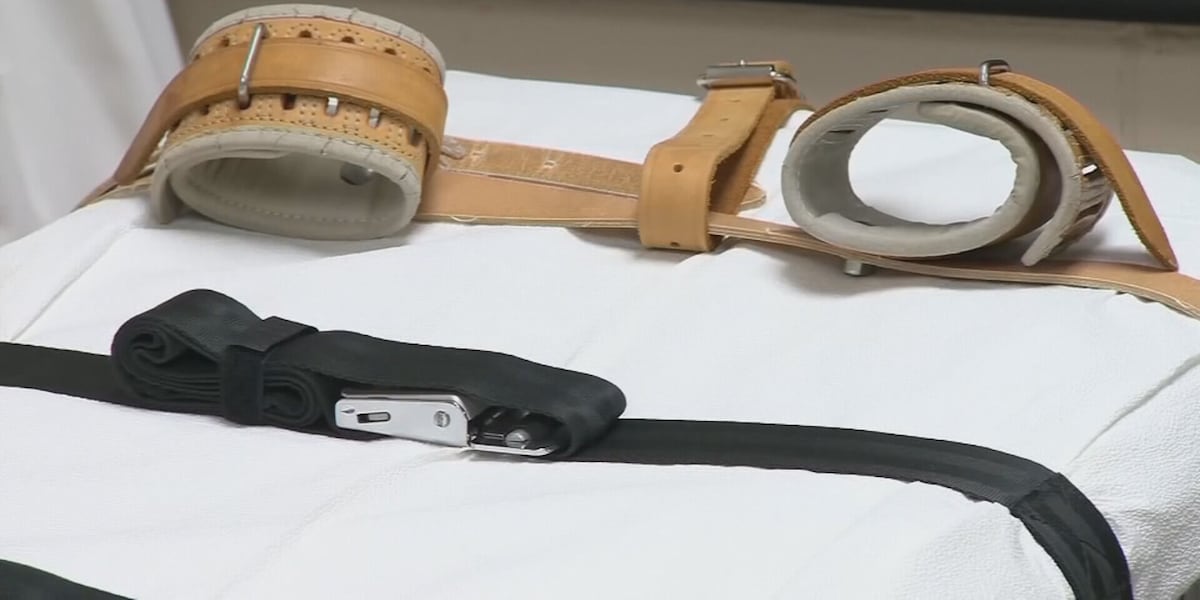
Christa Pike, 50, remained hospitalized Thursday receiving what her attorneys described as “lifesaving care” after surviving two doses of pentobarbital during a lethal injection attempt Wednesday night. Prison witnesses reported Pike was heard snoring loudly more than an hour after the procedure began before prison officials cut the execution chamber’s microphone.
Tennessee Republican Gov. Bill Lee called the botched procedure “deeply disturbing,” ordering an independent review and indefinitely postponing all other scheduled executions in the state this year. Pike’s legal team has termed the execution unconstitutional torture and petitioned to commute her death sentence.
In Nevada, civil liberties leaders and criminal justice advocates say the situation in Tennessee illustrates the constitutional and logistical issues that have kept Nevada’s death chamber dark since 2006.
“What happened to her yesterday is very emblematic of that. It may range between cruel and unusual punishment and torture,” said Athar Haseebullah, executive director of the American Civil Liberties Union of Nevada. “When witnesses report that the state spends more than an hour attempting to execute someone and two doses are administered and she’s unconscious and folks are acting as if at any level that’s a normal process… It just demonstrates how dangerous the death penalty is as a whole.”
An unprecedented survival
Pentobarbital, a barbiturate used for sedation and veterinary euthanasia, has become the drug of choice for states and the federal government after pharmaceutical manufacturers began restricting sales of traditional three-drug lethal cocktails. In execution settings, states typically administer a 5-gram dose, exceeding medical thresholds.
While past lethal injection failures in the U.S. have involved executioners struggling to find suitable veins before administering drugs, experts say an inmate surviving multiple doses of pentobarbital and living long enough to require hospital intensive care is unprecedented.
The drug has also drawn medical scrutiny. A 2025 federal Department of Justice review found pentobarbital can trigger pulmonary edema, a rapid buildup of fluid in the lungs that creates a sensation of drowning or suffocation before death, leading the government to note “significant uncertainty” over whether single-drug protocols cause unnecessary suffering.
“There were some studies done that folks’ lungs were actually filling with fluid, and so they were actually essentially drowning to death,” said Mark Bettencourt, executive director of the Nevada Coalition Against the Death Penalty. “Drug manufacturers and pharmaceutical companies don’t want to see their drugs, which are supposed to be used for saving lives, used for taking lives.”
Nevada’s 20-year execution hiatus
The fallout from Tennessee lands on Nevada, which has not carried out an execution since Daryl Mack was put to death in April 2006.
As FOX5 Investigates reported last month, the state’s execution machinery has ground to a halt amid drug shortages, court challenges, and an unwillingness to test alternative execution methods.
In 2016, the Nevada Department of Corrections reached out to 247 pharmaceutical companies in an effort to acquire lethal injection drugs; not a single company submitted a bid. When Nevada did manage to obtain drugs, manufacturer Alvogen sued the state in 2018 to prevent their use, forcing the state to return its supplies in 2020.
In a May court filing, state attorneys admitted NDOC has zero usable execution drugs and all previously acquired supplies have expired.
Bettencourt said if Nevada were to resume executions today, prison officials would be operating in uncharted territory.
“In Nevada, what we see is that there are all of these questions that have been unresolved around the logistics of how we’ll carry out an execution,” Bettencourt said. “We haven’t done this in 20-something years. So all of the folks that will be responsible for this will essentially be starting from scratch here in Nevada.”
Haseebullah also pointed to taxpayer spending, noting the state spent more than $800,000 in 2016 to construct an execution chamber at Ely State Prison that has never seen an execution.
Local cases caught in legal gridlock
Despite having no viable lethal injection drugs, local prosecutors have continued to pursue capital cases. Clark County ranks fifth in the nation for new death sentences over a recent five-year period.
In April, the Clark County District Attorney’s Office went to court seeking execution warrants for three long-time death row inmates: Zane Floyd, convicted of killing four people in a 1999 grocery store shooting; Donald Sherman, convicted of a 1994 hammer murder; and Sterling Atkins, convicted of a 1994 rape and murder.
Three months later, the DA’s office asked judges to pause those requests, citing pending litigation without providing further detail.
Advocates argue that pursuing death sentences without a viable execution method creates a coercive dynamic in plea negotiations.
“One of the biggest challenges with the use of the death penalty… isn’t even the administration of the death penalty, it’s that it’s basically used to coerce pleas out of people,” Haseebullah said. “When the threat of death is placed before you, or the alternative is to plead guilty to something you may not have done… most people end up opting for a coercive plea that allows you the chance to maintain your life.”
“These types of cases, Tony Carruthers, Christa Pike, these horrible and devastating outcomes are exactly the reason why Nevada needs to move away from the death penalty,” Bettencourt added.
In response to Tennessee’s failed execution, the Tennessee Department of Correction stated that staff “followed every step of the State’s lawful, established execution protocol approved by the Attorney General’s Office.”
FOX5 Investigates reached out to the Clark County District Attorney’s Office again on Thursday seeking comment on the Tennessee case and the status of local capital warrants, but did not receive a response. The Nevada Department of Corrections has also previously declined to comment on its execution preparedness.
Copyright 2026 KVVU. All rights reserved.