



LAS VEGAS (FOX5) — Sheriff Kevin McMahill has pushed since taking office to make Metro one of the most advanced law enforcement agencies in the country. Metro uses artificial intelligence, license plate reading cameras, drones and other technology, McMahill said in an exclusive sit-down interview.
“All of the things that lessen injuries to officers, injuries to suspects, and lead to better outcomes,” McMahill said. “Technology is proving beyond valuable for all of those things.”
Inside the Fusion Watch Center
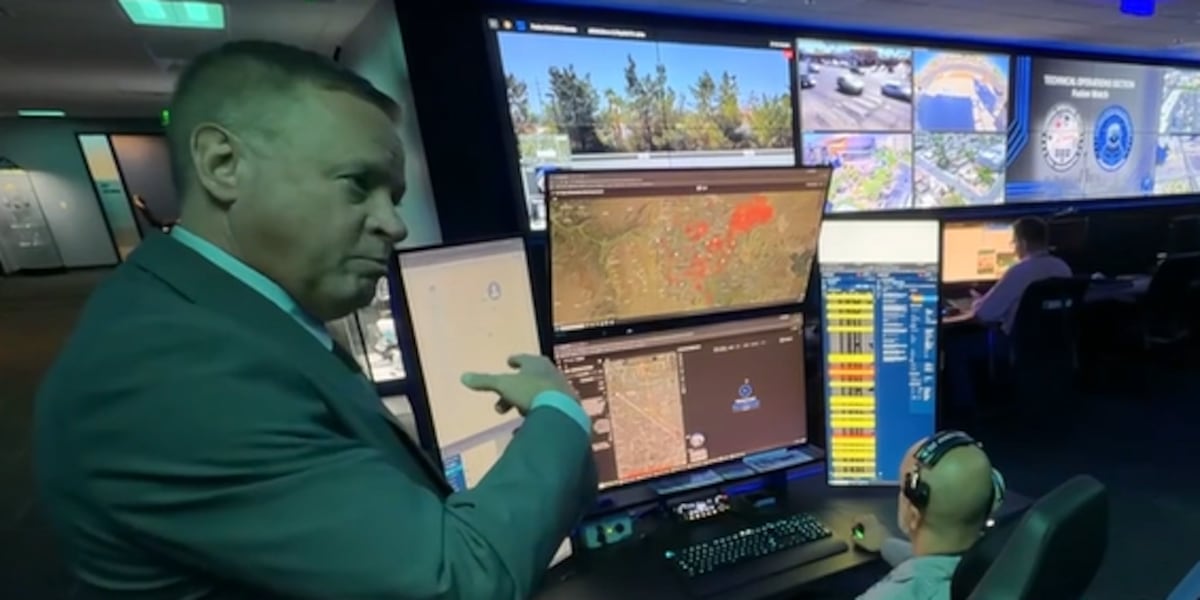
McMahill walked us through Metro’s Fusion Watch Center, the central nervous system of its technology efforts.
“So, as you walk in here, we intentionally made this look very futuristic…” McMahill said.
Data collected from drones, license plate reader cameras (ALPR’s), and gunshot detection systems is analyzed at the center.
MORE ON FOX5: LVMPD sheriff defends blocking repeat offender from electronic monitoring after 36th arrest
Drone program expands
The drone system is the most advanced aspect of the department’s technology, according to the segment.
“So, total flights, current year to date is 20,141,” McMahill said. “That’s 10,000 we had last year, so we’re going to triple it this year. More than anybody in the country.”
McMahill said drones give officers a bird’s-eye view of what’s happening at a scene.
“Drones, as an example, give real-time intelligence to police officers on the scene as they’re responding, because the drone is beating my cops to the call 75% of the time,” McMahill said.
McMahill said the drone team recently helped find an 89-year-old man who had walked away from his caregiver into the desert.
“He was 89 years old on one of the hottest days of the year, and we couldn’t find him,” McMahill said. “And we’d flown drones to the capacity that they were able to go to. And one of the operators decided to go just a little further and located him lying in the middle of the desert, probably just within minutes of actually dying.”
License plate reader cameras
The Fusion Center also receives data from license plate reader, or Flock, cameras. Metro has access to around 300 of them in the valley.
McMahill knows the cameras are controversial, saying “the reality of it is, it’s based on when a crime has been committed. They have the ability to track a plate, a vehicle make, and a model, maybe a description of an individual inside of that.”
McMahill said he is aware that people opposed to the cameras don’t want to be tracked or have their data misused.
“You have to have those guide rails, you have to have policies in place, you have to have auditing in place, and you have to have discipline in place for when those individuals violate the rules of the organization,” McMahill said.
McMahill says, “These are essential tools for law enforcement to bring suspects to justice… At least educate yourself about them. Don’t just consider it that these are bad tools for police to spy on you because we’re not trying to spy on you. We’re trying to take bad guys that have committed crimes and put them in jail. And so really, really effective tool.”
AI development underway
Metro is currently working with leading AI companies to develop what McMahill calls “Metro’s AI brain.”
“I have 55 million files, access data points in Metro,” McMahill said. “And there’s no way a detective or an analyst can go through these things rapidly to gather clues from each one of these while we’re investigating a crime. AI can do it like that.”
McMahill said an officer investigating a crime could enter a few data points into the system to find connections to other records.
Copyright 2026 KVVU. All rights reserved.