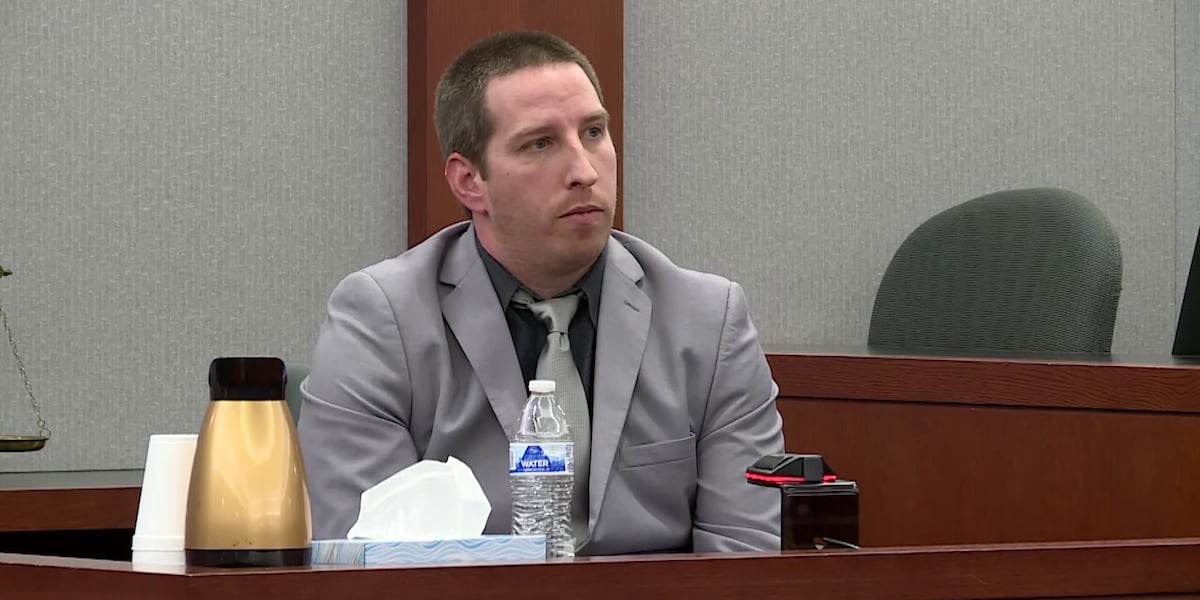


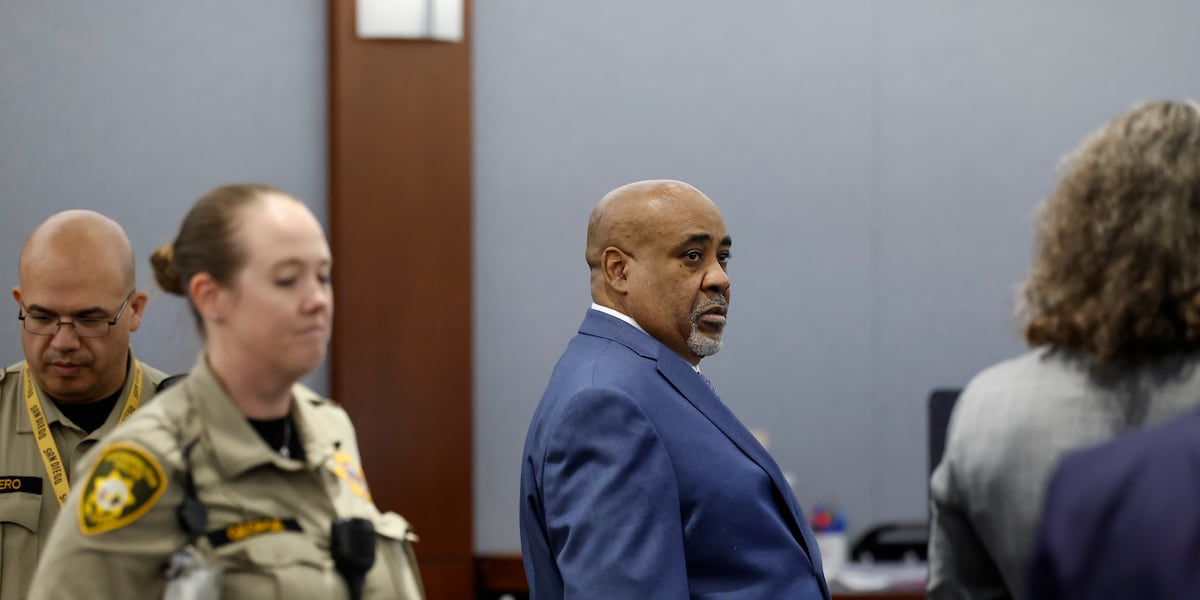

LAS VEGAS (FOX5) — As the trial of Duane “Keffe D” Davis continues in Las Vegas, the prosecution officially rested its case on Wednesday after calling 25 witnesses and presenting hours of audio, including some secret recordings.
Below is a day-by-day timeline of the court proceedings, witness testimonies, and crucial evidence presented so far as the defense gears up to bring up their witnesses starting on Thursday.
Day 1 (August 17): Opening statements and initial witnesses
The trial began with opening remarks from both sides and testimony from the first batch of witnesses who investigated the aftermath of the September 7, 1996 shooting.
- The prosecution’s theory: Prosecutors Marc DiGiacomo and Binu Palal argued that the shooting was an act of gang-related retaliation. They say that while Duane Davis did not personally pull the trigger, he orchestrated the attack to seek revenge for his nephew, Orlando “Baby Lane” Anderson, who had been beaten by Tupac Shakur and Suge Knight’s entourage at the MGM Grand earlier that evening following a Mike Tyson fight.
- The defense’s stance: Defense attorney Michael Sanft urged the jury to focus strictly on physical facts. He argued that Davis’s previous self-incriminating statements and “confessions” in books and interviews were fabricated solely for money.
- Witness testimonies:
- Garry Dale (LVMPD Bike Detail): Testified to initiating an initial traffic stop on the black BMW carrying Tupac Shakur and Suge Knight because it didn’t have a license plate.
- Ingrid Stokes (Eye-witness): Testified that she was in a vehicle with three other women when they ran into Shakur and Knight shortly before the shooting.
- Brent Becker (LVMPD Homicide Detective): Testified via Zoom that Shakur had already been transported to the hospital by the time he arrived at the scene. He noted it was highly unusual for homicide detectives to be dispatched so quickly unless a victim was already deceased or near death.
- Fred Miller (LAPD Homicide): Testified via Zoom regarding his investigation into the murder of Christopher Wallace (The Notorious B.I.G.). Under questioning, Miller confirmed that Duane Davis had been considered a suspect in that investigation.
- Critical evidence: The day concluded with the playback of a 40-minute recorded interview between Davis and Detective Miller following the murder of Biggie Smalls.
Day 2 (August 18): Autopsy evidence, casino video and tension in court
Day two focused heavily on forensic evidence, the moments leading up to the shooting, and explosive testimony from a former Death Row Records associate.
- Forensic and crime scene evidence:
- Thomas Kern (LVMPD Crime Scene Analyst): Authenticated autopsy photos and detail-oriented evidence from the scene of the shooting.
- Dr. Lisa Gavin (Medical Examiner): Presented autopsy findings detailing the fatal gunshot wounds.
- Photos from the autopsy were presented to jurors during this time. Members of the Shakur family were seen temporarily leaving the courtroom.
- The MGM Grand altercation:
- Michael Ingram (MGM Investigator): Authenticated security camera footage from the casino showing the infamous 1996 fight between Tupac’s entourage and Orlando Anderson.
- Kenneth Rios (Former LVMPD Sergeant): Testified that he was on uniform patrol at the MGM during the fight and made initial contact with Orlando Anderson afterward.
- Eyewitness and ballistic insights:
- William Heidmeyer (Maxim, now Westin, Hotel Security): Testified to hearing gunshots and spotting a white Cadillac driving in front of Shakur’s black BMW.
- Dean O’Kelly (LVMPD): Reviewed physical evidence up close, suggesting the weapon used in the homicide was a Glock .40-caliber handgun.
- Explosive testimony:
- James McDonald (Death Row Associate “Mob James”): Delivered heated testimony, clashing openly with the defense. When asked about Tupac’s conflicts, McDonald stated, “I think Tupac inherited the beef between Suge Knight and Puff. It wasn’t our beef; it was between Suge Knight and Keffe D.” McDonald accused Davis of participating in the narrative purely for a paycheck.
- Expressing frustration on the stand, McDonald demanded to be treated as a hostile witness, stating to the defense: “You’re not going to talk to me and tell me, as a grown man, what I have to do up here. I’m not finna sending him to prison. You are.”
- Reggie Wright Jr. (Former Head of Security, Death Row Records): Denied any personal involvement in the conspiracy, answering a direct question with a firm, “Absolutely not.”
Day 3 (August 19): Federal convictions and claims of Sean ‘Diddy’ Comb’s involvement
Following a delayed start, day three brought major disclosures regarding Davis’s criminal history and alleged financial motives behind the alleged hit.
- Wade Lee (Former FBI Agent): Revealed to the jury that Davis was a long-time person of interest and had previously served time in federal prison on drug trafficking charges. Because criminal histories are generally kept from juries, Judge Carli Kierny issued a limiting instruction: “These are not offered to show that Mr. Davis has a propensity to commit crimes. Instead, they are offered to establish the credibility of statements made by the defendant in relation to this case, as well as motive and identity.”
- Daryn Dupree (Former LAPD Detective): Detailed meetings with Davis regarding the Biggie Smalls murder investigation. Dupree testified that when discussing the two legendary hip-hop homicides, Davis remarked, “We did the other one” (referencing Tupac).
- Dupree further testified: “Sean ‘Puffy’ Combs was supposed to have given money to Eric ‘Zip’ Martin to give to Mr. Davis for payment of the Tupac murder.”
Day 4 (August 20): Jailhouse recordings and payment allegations
The prosecution continued to build on the theory that Davis operated under the promise of a payout.
- Denvonta Lee (Associate of Orlando Anderson): Testified regarding his relationship with Anderson and the volatile environment surrounding the South Side Compton Crips.
- 2008 secret recording: Prosecutors played a 2008 police interview with Davis. It was suggested that Davis was unaware the interview was being recorded at the time.
- The “Diddy” connection returns: In the played recording, Davis told detectives that he expected to receive payment from Sean “Diddy” Combs following Tupac’s death in exchange for the hit.
Day 5 (August 21): Documentaries, media deals and authenticity checks
The final day of the week focused on how Davis’s public accounts of the murder were compiled for television and whether his stories were scripted.
- Leonard Jefferson (Photographer): Testified about taking the iconic, final photo of Tupac Shakur and Suge Knight in their BMW shortly before the shooting. Under cross-examination, Jefferson denied rumors that the scene or photo was staged.
- Mario Diaz (Filmmaker/Producer): Testified about producing the BET documentary series Death Row Chronicles. He confirmed utilizing Davis’s 2008 federal proffer agreement statements for the show. Diaz emphasized that the interviews were unscripted and no questions were provided to Davis in advance, stating he adhered to the “strictest journalistic standards.”
- Michael Dorsey (Film Producer): Testified that representatives for Sean “Puffy” Combs sent a defamatory warning to Apple TV in an attempt to block the documentary’s release, though no lawsuit was ever filed. Dorsey admitted to recording his own phone audio during production, which he handed over to prosecutors following a subpoena.
- Portions of Dorsey’s audio recordings were played to the court to close out the day’s proceedings.
Day 6 (August 24): Unedited audio and heated courtroom exchanges
The trial resumed on Monday with continued testimony from filmmaker Michael Dorsey, accompanied by hours of unedited, raw audio recordings.
- Tensions flare: Things grew tense during cross-examination between Dorsey and defense attorney Michael Sanft. At one point, Dorsey attempted to direct a question back at Sanft, prompting the judge to quickly intervene and remind Dorsey that witnesses are not permitted to ask questions.
- The unedited BET interview: Prosecutors played several hours of raw, unedited interview recordings captured during the production of the documentary.
- Audio revelations: In the unedited tapes, Davis refers to Tupac as an “ignorant kid” while discussing his death. When asked if he had any apologies for the Shakur family, Davis firmly declined, stating: “No. No, I didn’t do nothing. I didn’t do nothing to his family.”
Day 7 (August 25): Eyewitnesses, ballistics and search warrant revelations
Day seven saw testimony from Tupac’s childhood friend, detailed breakdowns of the search warrant conducted in 2023, and expert testimony on street gang structures.
- Malcolm Greenidge (E.D.I. Mean of the Outlawz): A childhood friend and musical collaborator of Tupac, Greenidge testified about the night of the shooting. He was traveling in a vehicle nearby when the shooting took place. Greenidge testified that he did not see the shooter’s face, noting that everyone inside the attacker’s vehicle appeared only as “silhouettes.”
- Henderson search warrant disclosures: Three LVMPD personnel—Senior Crime Scene Analyst Jeffrey Scott, Senior Crime Scene Analyst Steavie Felabom, and Homicide Detective Justine Gatus—individually detailed the September 2023 execution of a search warrant at Davis’s Henderson residence. Evidence photographs shown to the jury included:
- A Dodge Challenger
- Physical copies of Davis’s memoir, Compton Street Legend
- Numerous newspaper clippings and articles focused on Tupac Shakur, Suge Knight, and the 1996 shooting.
- Ballistic evidence:
- Mark Hatten (LVMPD Officer): Briefly took the stand to examine the seven bullet cartridge cases recovered from the crime scene. Hatten testified that ballistic evidence confirms only a single weapon was used in the shooting. Neither the defense nor the jury asked Hatten any questions.
- Gang hierarchy and cross-examination:
- Robert Ladd (Retired Police Officer): Provided testimony outlining Compton street gang culture and operational structures. Ladd, who previously worked alongside Reggie Wright Sr., identified Duane Davis as a prominent “shot caller,” ranking him “as high as you can get” within the South Side Compton Crips hierarchy.
- Ladd distinguished Tupac Shakur’s lifestyle from active gang members, explaining that while Shakur associated with the Mob Piru set and embraced the aesthetic, he was primarily a “rap mogul” rather than an active street-gang participant.
- The defense’s counter: Under cross-examination, Ladd acknowledged that Compton police investigations yielded no physical evidence placing Davis in Las Vegas on the night of the shooting, nor did they have physical evidence that Davis directly ordered the hit.
Day 8 (August 26): Jailhouse phone calls and the prosecution rests
The state rested its case Wednesday afternoon, introducing crucial jailhouse recordings and media interviews beforehand.
- Digital evidence and audio clips:
- Adam Stoehr (Electronic Evidence Specialist with the Clark County DA’s Office): Testified regarding how he prepared and compiled the audio and video clips presented to the court.
- Interviews Played in Court: The state played video footage of Davis discussing his memoir, Compton Street Legend, where he actively avoids answering specific questions, stating he did not want to discuss certain topics.
- In another clip, Davis speaks on his battle with cancer. Davis then claims in a third segment that Tupac was in the wrong for jumping his nephew, Orlando Anderson, commenting: “He was a kid and my nephew never jumped on him.”
- Explosive jailhouse phone calls: Prosecutors played several recorded telephone conversations made by Davis while incarcerated. In one recording, Davis is heard saying: “I have blood on my money.”
- Brief cross-examination: Neither Sanft nor the jurors had questions for Stoehr.
- The prosecution rests: Following Stoehr’s exit from the stand, prosecutors officially announced that the state rests its case.
- Defense’s turn begins Thursday: The defense announced it will begin presenting its case on Thursday. Defense counsel expects to call four witnesses to the stand, with plans to close their arguments by Monday.
- A decision for Davis: Before the end of the hearing, Davis was advised of his constitutional right to testify on his own behalf, and was instructed that he must finalize his decision on whether to take the stand overnight.
Stay with FOX5 for the latest updates in the case.
Copyright 2026 KVVU. All rights reserved.