



LAS VEGAS (FOX5) — A phase of the Flamingo Wash project is now complete.
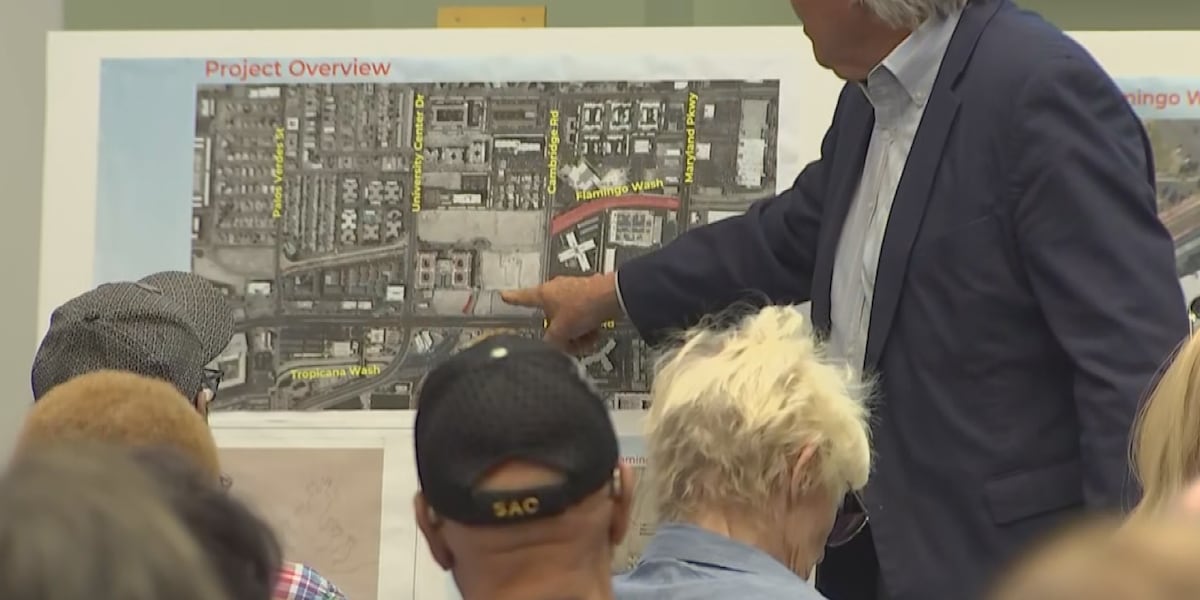
The segment runs from Maryland Parkway to Cambridge Street. The price tag is a little over $14 million.
Crews lined the channel with concrete and increased capacity to handle a 100-year flood.
Neighborhood safety
The project is designed to protect bridges at Maryland Parkway and nearby homes and businesses from flooding.
“This project will really help protect the bridges at Maryland Parkway and make this community in this neighborhood safer from the possibility of flooding,” said Andrew Trelease of the Clark County Regional Public Control District.
READ MORE: Homeless living in wash near UNLV will be ordered to leave
The channel features red-tinted, stamped concrete to improve aesthetics. New metal fencing on both sides was installed for security and to keep people out of the channel.
A long-standing issue with unhoused people living in the wash and spilling into neighborhoods has affected the area. The fencing and reconstruction are meant to discourage encampments in the channel.
Regional projects
The Regional Flood Control District has completed six projects in the last year, totaling $66 million. Nine projects are currently in construction, worth about $114 million.
The board approved eight more projects, over $79 million, including phase two of Flamingo Wash from Palos Verdes to University Center, about $10 million, and a detention basin and channel work at Tropicana and Paradise, about $26 million.
The district is funded by a quarter-cent sales tax. Revenue last year was about $160 million. About $100 million a year goes to design, construction and maintenance. Roughly 90% or more revenue goes directly to flood-control projects, not administration.
Flood season warning
Flash flood season runs from July through September. Monsoon storms can form quickly, even on clear days, dump heavy rain and cause serious flooding.
Officials warn people to stay out of flood channels and said they are dangerous even when they are dry. Just a few inches of fast water can sweep someone away.
Contractors had to work in an active wash, with several floods hitting during construction. Sometimes they had to pull out, let the water run, then clean up, and resume.
Stormwater ultimately goes to Lake Mead, then back as drinking water.
Copyright 2026 KVVU. All rights reserved.