


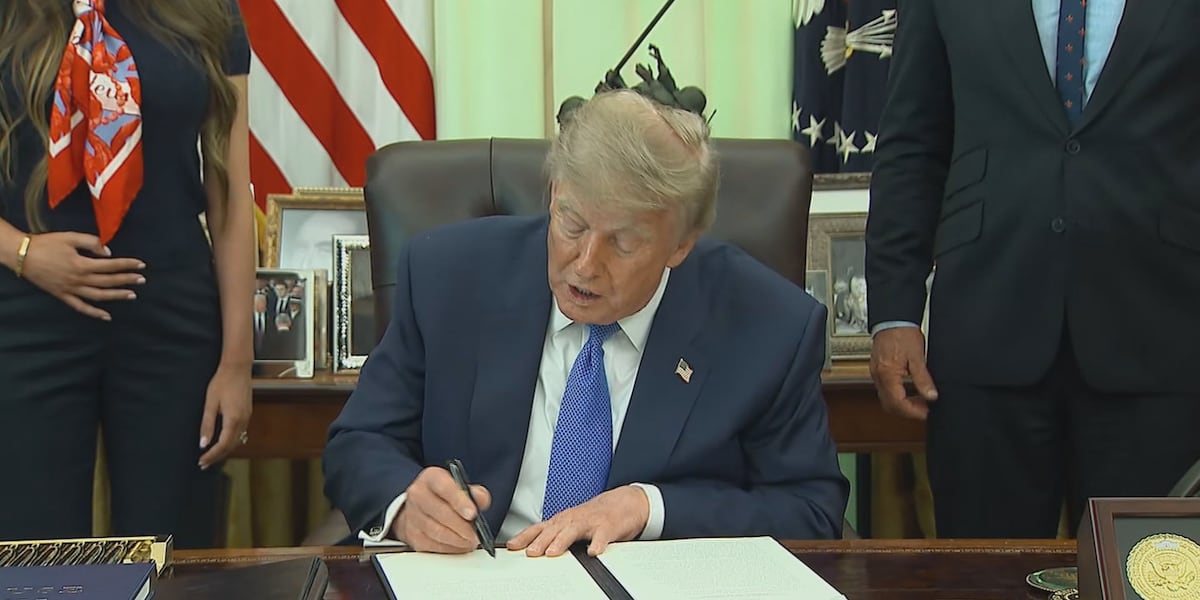

LAS VEGAS (FOX5) — President Trump signed an executive order calling for major changes to childhood vaccinations. For many parents across the country, there is unlikely to be an immediate impact on vaccine access.
What the executive order calls for
The order calls for scaling back the number of vaccinations children receive. According to a White House fact sheet, the order recommends all children receive immunizations providing protection for 11 diseases — a decrease from the 18 diseases recommended by the Centers for Disease Control and Prevention in 2024.
READ MORE: Henderson Hospital to end maternity and NICU services
In 2024, the recommended number of routine vaccines had risen to at least 84 vaccine doses in at least 57 shots for 17 diseases, plus the RSV monoclonal antibody immunization, for a total of 18 diseases.
A scientific assessment cited in the order found the United States currently recommends more childhood vaccines than any peer nation.
The White House fact sheet also states the order recommends separating the combined measles, mumps, and rubella vaccine into three single-disease shots and administering all vaccines during separate medical visits “to give parents more options regarding the timing and frequency of this vaccine administration.”
States that enact school vaccine requirements are advised under the order to consider the recommended childhood vaccine guidelines and update their laws to reflect them.
What a local pediatrician said
Dr. Terence McAllister, a pediatrician, said the MMR vaccine is not currently available as three separate shots domestically.
“We used to give MMR vaccines separately as three separate shots. We don’t anymore, and nobody makes it that way, at least not in this country. So there’s no source for that vaccine at the moment,” McAllister said.
McAllister said states — not the federal government — have the authority to require vaccinations. He said his concern centers on how federal recommendations affect insurance coverage.
“Our concern, though, with changes in the federal government’s recommendations about vaccines is that insurance plans often determine which vaccines they’ll cover based on which vaccines are recommended by the federal government. So although that hasn’t happened yet, that’s our concern that changes in the federal recommendation for vaccines may affect coverage for these vaccines. It may make it harder for certain people to get the vaccines,” McAllister said.
He encouraged parents to speak with their doctors amid the confusion surrounding the changes.
“We believe that the vaccines are safe and effective according to the schedule that’s recommended by the American Academy of Pediatrics. The other thing that I think is very important for everybody to take away from this is that talk to your pediatrician about it. If you have questions, the questions are valid. And concerns, and there’s a lot of information out there, your pediatrician is a trusted source for this. And we welcome those discussions,” McAllister said.
Nevada’s current requirements unchanged
The Southern Nevada Health District said it is reviewing the recent changes to the federal childhood immunization schedule and their potential implications.
At this time, the changes to the federal recommendations do not change Nevada’s existing school immunization requirements.
Copyright 2026 KVVU. All rights reserved.