

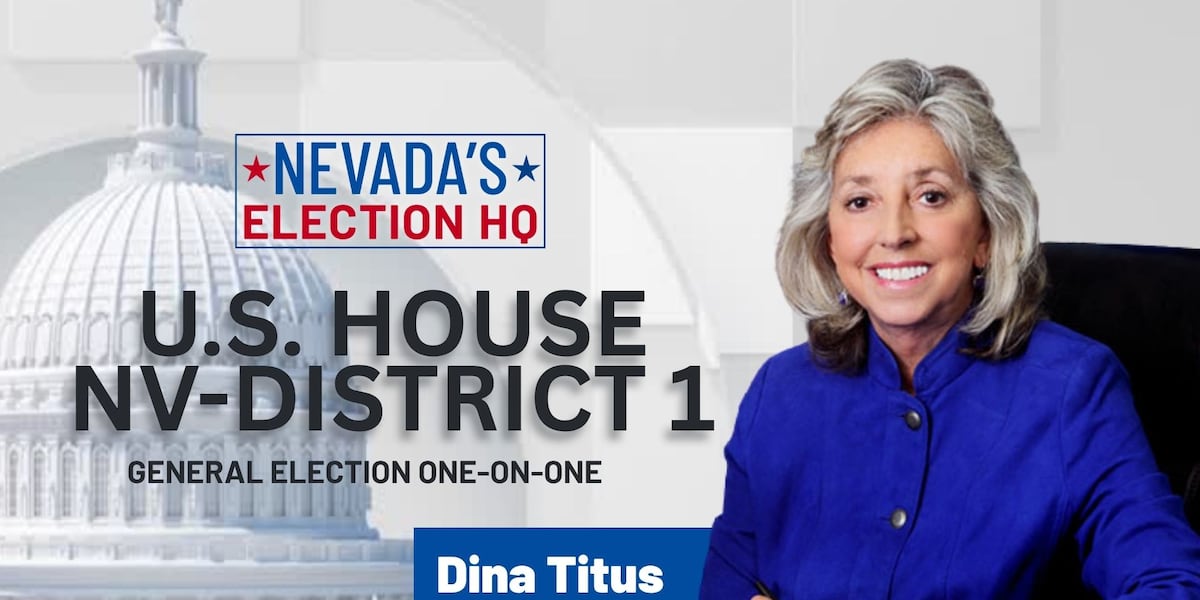

LAS VEGAS (FOX5) — Congresswoman Dina Titus said inflation remains the most common concern she hears from constituents as she campaigns for re-election, citing gas, grocery and health insurance costs.
“Everywhere I go, regardless of which neighborhood it is in the district, that’s the issue that people talk about,” Titus said. “They just can’t afford groceries, health insurance, gas.”
Gas prices and the war in Iran
Titus said gas prices have risen in part because of the war involving Iran, saying diesel costs a dollar more and affects people who drive trucks in the valley. She said Nevada has some of the highest gas prices in the country because the state has no refineries and depends on California for its supply.
Titus said she supports a proposed pipeline across the northern part of the state through Idaho and Wyoming to reduce that dependence. She said building an in-state refinery would take too long and that a pipeline would be more efficient, citing environmental impact and cost.
Titus said the war has closed the Strait of Hormuz, calling it a conflict that was expected to last two weeks but has continued for seven months.
Titus said the war has also cost American lives and said she does not know the original objective of U.S. involvement, whether it was to eliminate Iran’s nuclear material, pursue regime change or support Israel.
“If you don’t know that, you don’t know when you’re going to be able to get out, because how do you declare victory?” Titus said.
Titus said she supports using diplomacy to resolve the conflict and said Congress passed a War Powers Act intended to bring troops home, but said it did not pass the Senate due to Republican opposition.
Titus said she voted to support the earlier agreement with Iran regarding its nuclear program and would not have withdrawn from it.
Wages and tips
Titus said wages at the top of the income scale have increased while wages at the lower end have stagnated. She said she supports legislation to permanently eliminate income tax on tips, noting a version proposed by the president is temporary.
Titus said she has introduced a bill to pair the elimination of taxes on tips with an increase to the minimum wage for workers in jobs that do not receive tips. She said the bill has Democratic co-sponsors but is unlikely to move before the end of the current session.
Tourism
Titus, a member of the House Foreign Affairs Committee, said international tourism from Mexico and Canada has declined. She attributed the decline in part to rhetoric toward U.S. allies and said the State Department has lost resources and personnel, resulting in visa processing delays of up to a year in some countries.
Titus said fees have also increased for visas and for foreign visitors at national parks. She said declines in tourism reduce tax revenue and contribute to higher unemployment.
Titus said potential solutions include easing visa processing, restoring State Department personnel and maintaining consistent tariff policy.
Immigration
Titus said she supports a comprehensive approach to immigration reform, including a pathway to citizenship for recipients of Deferred Action for Childhood Arrivals and people with Temporary Protected Status.
Titus said she does not support increased funding for U.S. Immigration and Customs Enforcement, saying the agency has changed from its original purpose.
“Now they wear masks. They don’t identify who they are. They can burst into a home without any kind of papers, through a court,” Titus said.
Titus said she has observed effects in the district including decreased school enrollment and decreased attendance at churches and in-person shopping.
Water supply
Titus said Lake Mead’s water level continues to decline and referenced a Bureau of Reclamation proposal affecting water allocations along the Colorado River.
Titus said the proposal did not require northern states along the river to reduce water use for agriculture, while Nevada and Arizona faced larger cuts. She said the proposal could have required Nevada to reduce its water allocation by 70% over 10 years.
Titus said the region has implemented conservation measures and said she supports policies tying development approval to water availability, including for data centers. She said the Southern Nevada Water Authority is also pursuing desalination options in Southern California or northern Mexico in exchange for additional Colorado River allocation, and that the Desert Research Institute is researching cloud seeding.
Data centers
Titus said a data center proposal in Boulder City, within her district, drew opposition from residents after a solar energy project received permission from the Bureau of Land Management to build on public land before developers sought to replace it with a data center.
Titus described the issue as a national one affecting both Democratic and Republican areas. She said data center development should account for water use, impact on the power grid, pollution, noise, job creation and public input, and said local governments should receive a benefit if the state provides tax abatements.
Copyright 2026 KVVU. All rights reserved.