


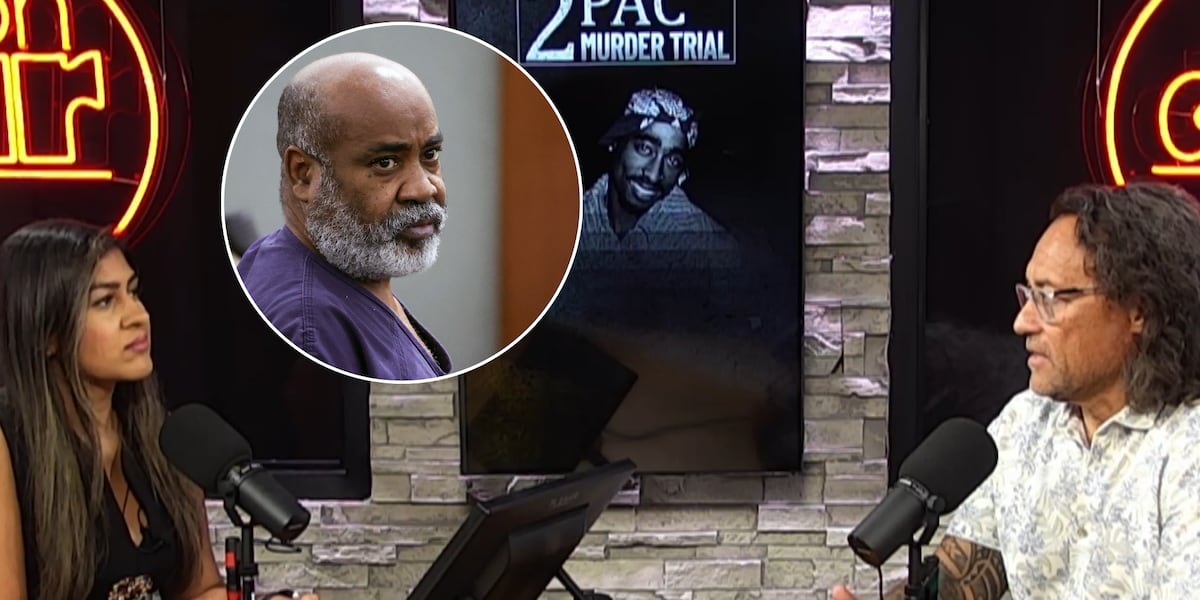

LAS VEGAS (FOX5) — The defense attorney for the only man charged in the 1996 murder of Tupac Shakur said he took the case pro bono and believes his client did not commit the crime.
Michael Sanft represents Duane “Keffe D” Davis, who was arrested in 2023 — nearly 30 years after Shakur was shot and killed in Las Vegas.
READ MORE: How Tupac Shakur’s 1996 Las Vegas murder became a trial nearly 30 years in the making
Sanft, a criminal defense attorney with 25 years of experience, said he was contacted by a colleague after Davis’s previous attorney withdrew from the case. Sanft said he was not familiar with Davis when he received the call.
“I did not know who Keffe D was,” Sanft said. “I just didn’t keep up with it.”
From two thousand to fourteen thousand pages
Sanft said he agreed to take the case without a retainer, in part to avoid financial constraints that he said may have contributed to the departures of prior counsel.
“I didn’t want to be hemmed up for payment,” Sanft said. “By not being tethered to a financial expectation by the family or by Keffe, it allows me to just run free and just do it the way I need to get it done.”
When Sanft joined the case in April, discovery stood at approximately 2,000 pages. He said that number has since grown to 14,000 pages spanning multiple jurisdictions, including the Los Angeles Police Department, the Compton Police Department, and the FBI. Sanft said a team of four has been working around the clock since April.
Sanft said he refused to push back the trial date, which had already been set by previous counsel for Aug. 10, because he did not want Davis to remain in custody any longer than necessary.
“When I had looked through what I had in the beginning, I believed Keffe didn’t need to be in custody a minute longer than he needed to be,” Sanft said.
Walking the streets of Compton
As part of his preparation, Sanft said he traveled to Compton, California, to walk the neighborhoods where events connected to the case took place. He said the city — roughly 10 miles by 10 miles — contained between 50 and 53 sets of Crip or Blood gangs operating in close proximity.
“Walking sort of the neighborhood where these competing gangs existed side by side tells you just how compact this whole thing was,” Sanft said.
Sanft also attended the funeral of Davis’s father in Compton early in the case. He said he went partly for research purposes and partly out of respect for his client, who was in custody and unable to attend.
“I felt like it was important as a representative myself to step in and be there on his behalf for his father,” Sanft said.
Jury selection and sequestration
Sanft said he expects the trial to last five to six weeks and that jury selection will involve standard questions about financial hardship, familiarity with law enforcement, and knowledge of Tupac Shakur.
“I would expect if the question is asked ‘Does anyone know the name Tupac Shakur,’ I think pretty much everyone is going to raise their hands,” Sanft said. “It is whether or not you can be fair and presume that the man sitting there accused of the crime is innocent until such time they prove otherwise.”
Sanft said he sought to have the jury sequestered, citing concerns about media coverage during the trial.
That request was not granted, but he said the court agreed to other protective measures — including having jurors enter through private elevators, remain in the jury deliberation room during breaks, and have lunch brought to them each day.
“There’s no way around it,” Sanft said of media exposure. “When you walk out of that building you are going to be bombarded with things.”
Davis’s book and the question of testimony
Sanft said Davis’s published book, “Compton Street Legend,” has become a centerpiece of the prosecution’s case but declined to say whether it supports or undermines his client’s defense, noting the matter would be decided at trial.
On the question of whether Davis would testify, Sanft said the decision remains Davis’s to make.
“Every defendant has the right to testify on their own behalf,” Sanft said. “I cannot force someone to either testify or not testify.”
Sanft said Davis has been kept informed throughout the process and described his client as hopeful ahead of the trial.
“He is relieved we are moving at the pace that we are,” Sanft said.
Davis’s trial is scheduled to begin Aug. 10.
Copyright 2026 KVVU. All rights reserved.