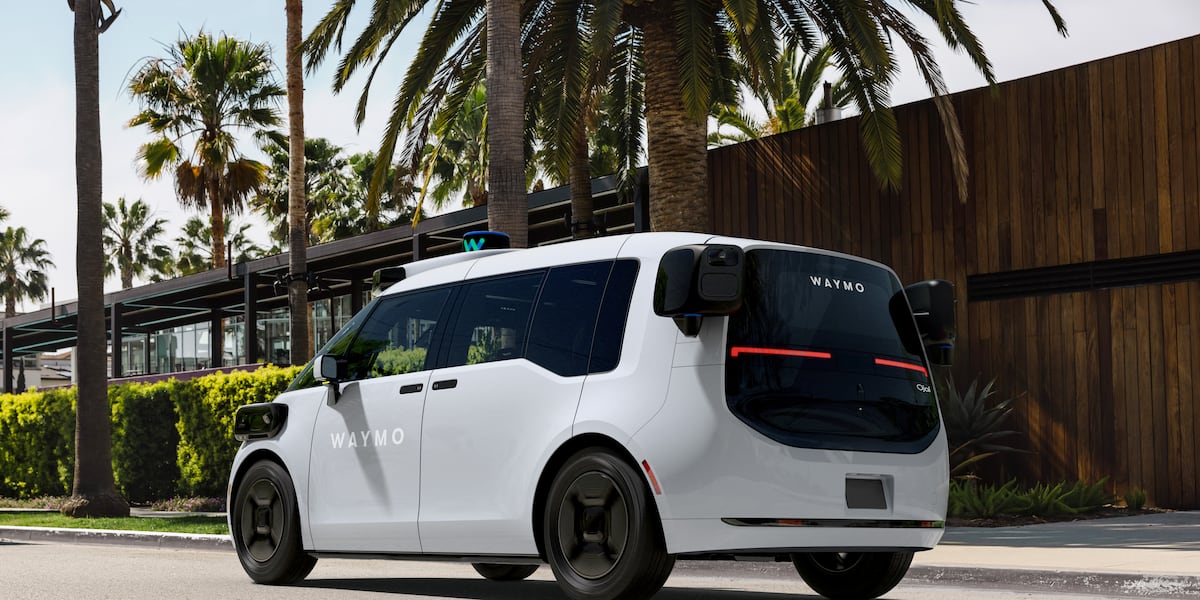



LAS VEGAS (FOX5) — The driverless vehicle market expanded across the Las Vegas Valley this month as Waymo deployed dozens of autonomous vehicles along the resort corridor.
City leaders have promoted the autonomous fleet as an efficient and clean transit alternative, though some community safety concerns surfaced following voluntary company recalls over the summer after vehicles navigated into freeway construction zones in other markets. Company officials stated the software issue was resolved almost immediately with system updates.
MORE ON FOX5: Waymo launches robotaxi service in Las Vegas
The fleet operating on Las Vegas roadways consists of Waymo’s sixth-generation Ojai model, which features 13 exterior cameras, four types of sensors, and artificial intelligence mapping systems. According to company figures, Waymo vehicles demonstrate a 94% lower rate of injury-causing crashes than human drivers, representing a 16-fold safety advantage.
Mapping local roadways
Waymo spent months preparing its systems for the unique driving environment in Southern Nevada before launching public rides.
“We’ve been here [testing] for over nine months, and then even some testing before that, making sure we understand how Vegas drives. So, we do detailed mapping of the area to make sure that even curb heights are the right height for when we’re stepping off the vehicle and optimizing for that,” said Mark Lewis, a spokesperson for Waymo.
While highlighting the platform’s reliability, Lewis acknowledged that vehicles occasionally encounter rare edge-case scenarios, such as the construction zones that led to the earlier recall.
“Our engineering team really looked into that [and] made a lot of proactive decisions to make sure that it doesn’t happen again,” Lewis said. “Right now, we encounter thousands of construction zones every day. We’re driving so many miles and do 500,000 rides every week.”
Managing traffic and unpredictable drivers
To prioritize safety during its initial rollout, operations in Las Vegas are presently restricted to surface roadways rather than freeways.
Addressing how vehicles handle unexpected maneuvers from human motorists, Lewis explained that Waymo’s system draws on more than 220 million miles driven without a human driver to anticipate potential hazards and roadway flow.
“Well, because of the amount of sensor data that’s coming in, it’s not about what’s happening exactly right now. It’s already understanding the flow of traffic and where that vehicle is coming into,” Lewis said.
Members of the public can access rides in Las Vegas through a waitlist available on the Waymo mobile app.
Copyright 2026 KVVU. All rights reserved.