


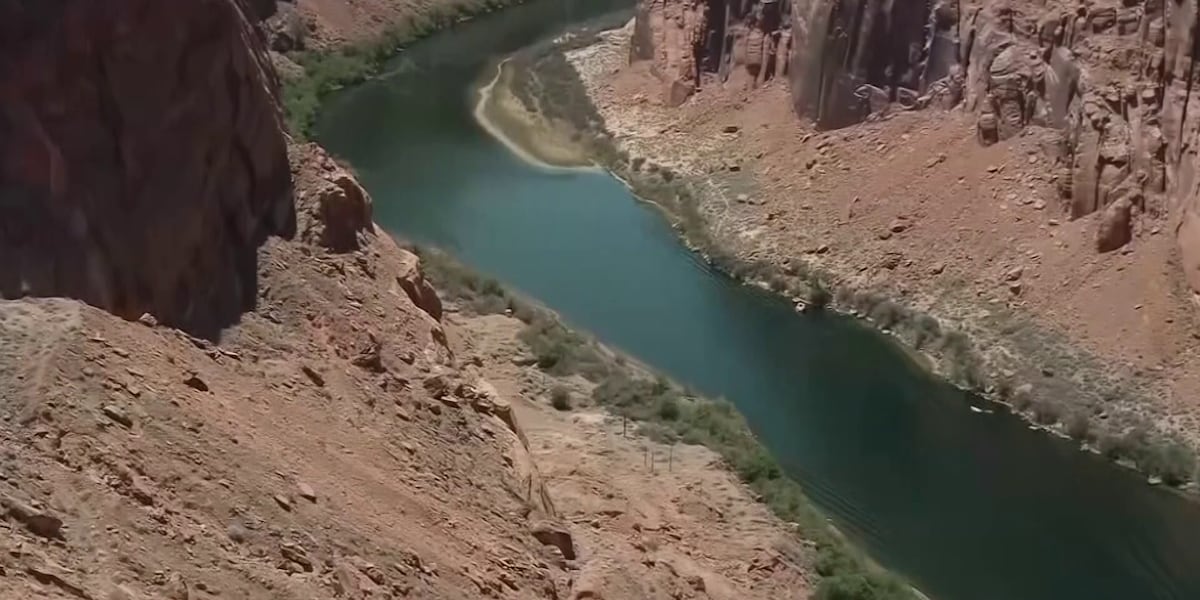

LAS VEGAS (FOX5) — The Bureau of Reclamation and agencies in California, Nevada and Arizona signed a Memorandum of Understanding on Tuesday to jointly explore new water supply solutions for the Colorado River Basin.
According to a joint release, the MOU aims to improve long-term water management in the Colorado River Basin by advancing discussions to develop a framework that could allow for interstate water exchanges. Discussions would mainly focus on finding a pathway that would allow agencies to partner across state borders on desalination, recycled water and other water supply projects that would benefit multiple states.
MORE ON FOX5: Nevada lawmakers announce construction of massive water pipeline under Sloan Canyon
The MOU was signed by the Bureau of Reclamation, San Diego County Water Authority, Metropolitan Water District of Southern California, Southern Nevada Water Authority, the Arizona Department of Water Resources, Central Arizona Project and Salt River Project.
“As Colorado River conditions grow more challenging, regional partnerships like this are an essential tool to help ensure sustainable water supplies,” said John Entsminger, general manager of the Southern Nevada Water Authority. “This agreement allows us to explore forward-thinking, strategic investments that will strengthen water resilience in Southern Nevada and across the Lower Basin.”
How interstate exchanges would work
Interstate exchanges can allow shared financing of new supply projects that, through operational flexibility, could provide water to participating agencies when they need it most, taking advantage of variations in local hydrology across the Basin and other factors.
Future water exchanges would use existing infrastructure and avoid costly new infrastructure without changing or reallocating existing rights or obligating parties to projects.
Colorado River drought conditions
Long-term drought has reduced Colorado River system water storage to about 36% of capacity. The combination of the lowest snowpack on record and record-breaking heat has further intensified drought conditions.
These factors create elevated risks to essential water and power infrastructure that supply water to more than 43 million people, underscoring the need for near-term actions to balance supply and demand.
Copyright 2026 KVVU. All rights reserved.