


LAS VEGAS (FOX5) — As the Las Vegas Valley grapples with rising temperatures, local leaders gathered to discuss solutions for transit riders, drivers, pedestrians and communities to reduce the impacts of heat.
In 2024, amid record-setting triple-digit temperatures, the Clark County Coroner reported 527 people died from heat-related causes.
“We’re getting hotter earlier. We have more 100 days over 100 degrees in Southern Nevada. That’s the scale of the crisis we are dealing with, keeping public and transit riders safe,” said Andrew Kjellman of RTC of Southern Nevada.
RTC explains dangers, explores solutions
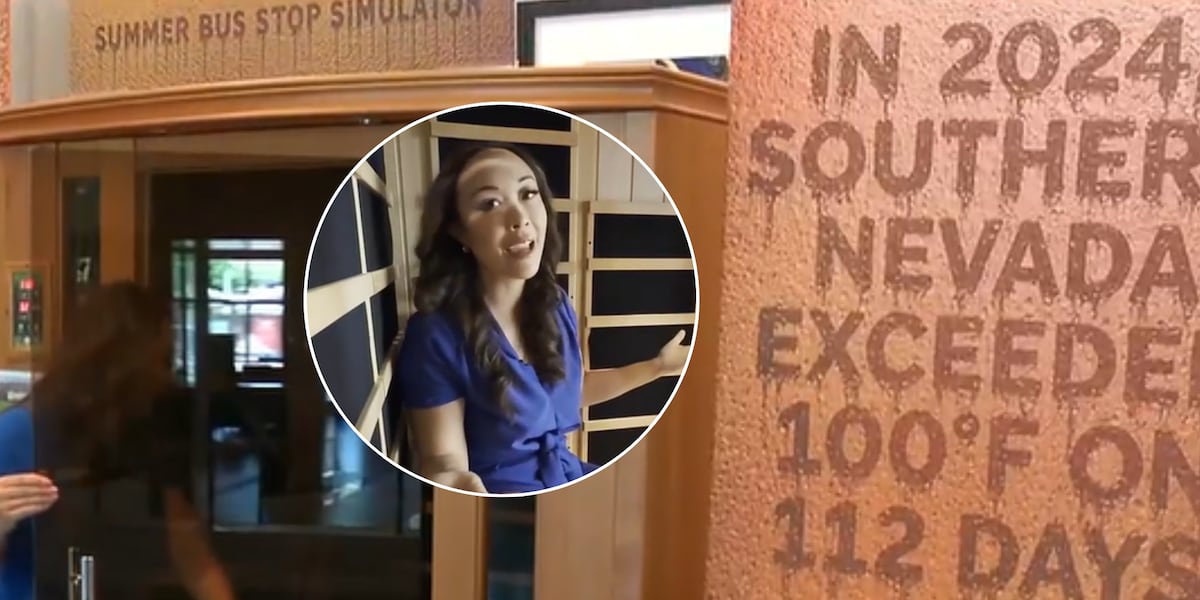
RTC brought a “simulator” to the Extreme Heat Summit in downtown’s Symphony Park, replicating what riders may endure daily while sitting or waiting for the bus: temperatures soaring up to 122 degrees.
Around half of RTC’s 3,700 transit stops have shade, Kjellman said. The agency invests $10 million annually to install more shade structures, including ones at high-traffic areas that cover both sides of the street.
MORE ON FOX5: RTC installs bus stop shades after urban heat study, rider complaints continue
“We have a type of shelter to fit every context of the roadway. We have slim lines, we have a regular general market shelter, and we’re also deploying new dual directional shelters that provide shade in the front of our customers and behind them, depending on what time of day it is,” Kjellman said.
“We do know that shade is the most important thing to cooling down the street network…That’s new transit shelters, and that’s street trees,” he said, noting other solutions proposed across the Valley.
The “heat island” effect is exacerbated in areas with more concrete, fewer trees and lower elevation. A 2022 study from RTC showed stretches of the East Valley are especially vulnerable.
“We will be coordinating with the Public Works Department, who builds and maintains the roadways. We will be working with them to ensure that our roadway designs are not overly wide to accommodate the traffic that they’re on, because a wide roadway, if it’s not carrying traffic, that’s just really a heat sink. It’s getting our valley hotter,” Kjellman said.
Solutions from other cities
A federally-funded study kicked off on Wednesday to help regional partners explore solutions from other cities to mitigate heat.
“Looking at these new innovative ideas and learn from our peers in the Intermountain West, like Phoenix, who are hotter than us, and see what they have done and what has worked,” Kjellman said.
The City of Phoenix presented one solution: cool pavements. More than 100 miles across the city of Phoenix have a special coating to reduce the surface temperature.
Surface temperatures can be reduced up to 12 degrees, officials told our sister station AZ family.
“This is a lighter-colored, more reflective coating on the road surface. One of the most encouraging results from that work is that we anticipate it’s going to increase the lifespan of the asphalt itself. Just as your skin does better when we have sunscreen in place, the asphalt does better with this coating in that it doesn’t get quite as hot during the day. It doesn’t experience that thermal wear and tear,” said David Hondula, an ASU professor and director of Heat Response and Mitigation for the City of Phoenix.
“The road is cooler, so if you happen to be on the road in bare feet or maybe your furry friend is on the road in bare feet, it’s a safer experience there as well,” he said.
The City allots $4 million a year for Cool Pavement projects, Hondula said.
Copyright 2026 KVVU. All rights reserved.