

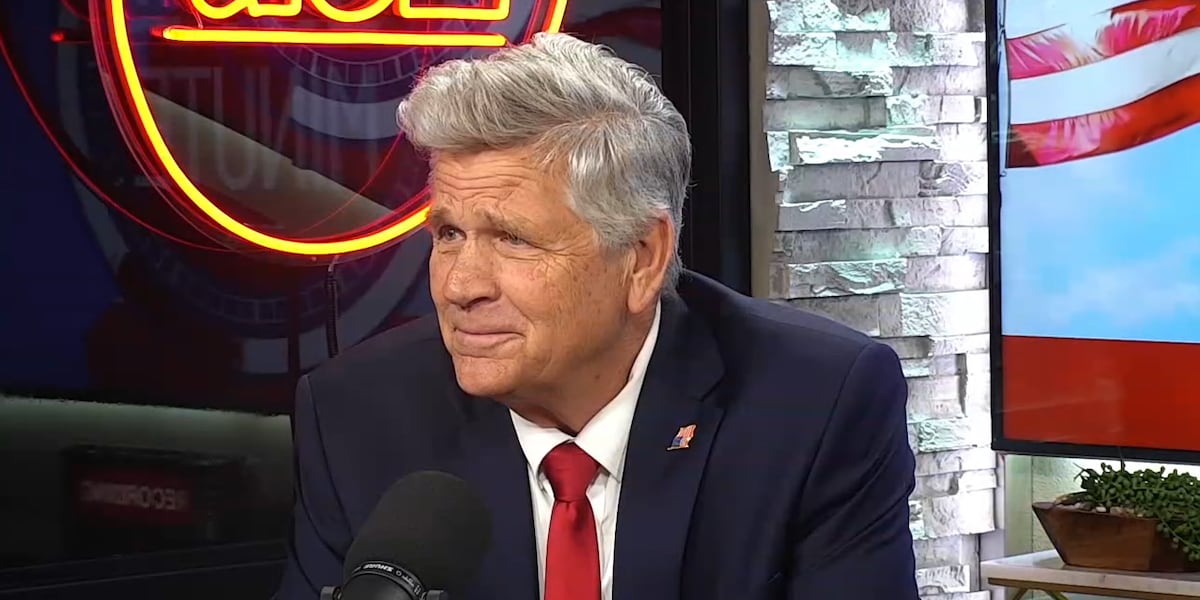

LAS VEGAS (FOX5) — Independent candidate for Nevada’s First Congressional District, Jim Blockey says he focusing on struggling small businesses and skyrocketing car insurance rates in his campaign.
Blockey, a Republican, taught in Clark County for 22 years and said he is running because the country is going in the wrong direction.
“We’re losing… that’s this country is small business,” Blockey said. “That’s what makes us different than a lot of the other countries is we have this small business and we’re losing them.”
Blockey said stores are closed along Boulder Highway and the trend needs to stop.
Car insurance rates
Blockey said car insurance rates are as high as a car payment and many people cannot afford coverage.
He said he will call for congressional hearings to ask insurance companies why rates are inflating three times higher than inflation.
“I think these people are greedy,” Blockey said. “They know that it’s… you have to have it.”
Blockey said corporations have bought out smaller insurance companies, kept the smaller companies’ names and raised rates. He said accidents have decreased greatly because of technology in new cars, but insurance rates still go up.
“With all the features they have in these new cars, accidents have actually decreased greatly and the insurance rates still go up,” he said. “That’s what we need to find out.”
Small business support
Blockey said Restaurant Depot is being bought out by Cisco, which will hurt small mom-and-pop restaurants.
He said the higher prices from the merger will put restaurants at risk of losing their businesses. Blockey said one responsibility of Congress is to prevent monopolies.
“We can stop that merger or at least we can, you know, keep them separate, make sure that Cisco and Restaurant Depot are run separately,” he said.
Blockey said small business owners love what they do but do not want to raise prices to the point where customers cannot afford it.
Water pipeline proposal
Blockey said a pipeline could bring water from flooding areas in the Midwest to the Colorado River.
He said flooding happens in the Midwest every year in different places, so different pipelines would be needed to put water into the Colorado River.
“If they can do a pipeline with oil, why can’t they do a pipeline with water?” Blockey said.
He said he has talked to engineers who say the project is possible and would take five to eight years to finish. Blockey said he brought up the idea almost 20 years ago.
Blockey said the cost would be outweighed by the amount of money the pipeline would save, though he acknowledged it would cost a few bucks.
Copyright 2026 KVVU. All rights reserved.