


LAS VEGAS (FOX5) — A UNLV research team is developing a solar-powered household filtration and distillation unit designed to treat and reuse graywater in rural Nevada communities, with onsite pilot testing expected to begin in mid-fall.
Civil and environmental engineering professor Eakalak Khan received more than $650,000 in phase II funding from the Cyrus Tang Foundation this spring to continue the project in collaboration with Northwest A&F University in China. The team is wrapping up lab-scale testing on the UNLV campus before advancing to field deployment.
MORE ON FOX5: Las Vegas markets cut staff, hours after SNAP benefit changes
How the system works
The two-part system targets graywater — water from showers and kitchen sinks that contains soap byproducts such as dish and laundry detergents. In the first stage, water undergoes gravity separation and passes through five naturally sourced filtration media, including sand, woodchips, and biochar. In the second stage, a solar still stationed on the roof of a campus building uses evaporation and condensation to further purify the water.
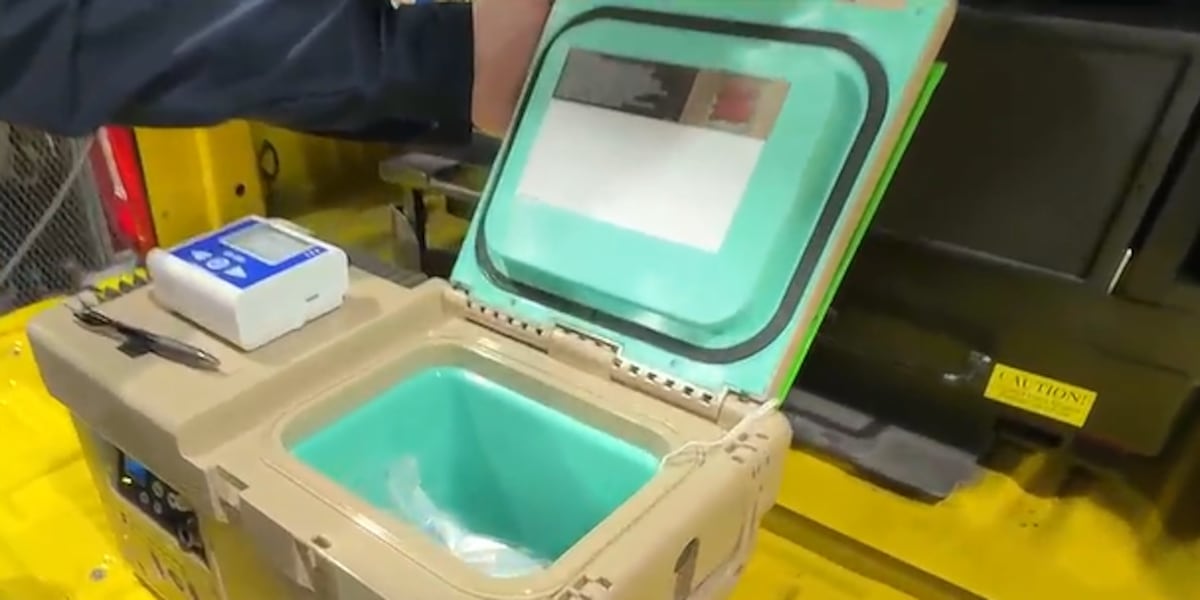
The current lab-scale model filters four liters of graywater. The household unit, being developed by David Rouhani, research laboratory manager for the department of civil and environmental engineering and construction, will scale up to 100 liters and use a cassette system with removable drawers to allow users to isolate individual media layers for cleaning or replacement.
“We’re taking something that people don’t want — wastewater — and making it into something they want,” Khan said. “It used to be labeled as waste or something that needs to be discarded. People think it’s yucky, right? Now, we’re trying to change that mindset so that it’s viewed as a resource. It’s usable, or reusable.”
Water quality results
UNLV postdoctoral researcher Thi My Hanh Le demonstrated the lab-scale model’s results using three test tubes showing a gradient from untreated graywater to clear, purified water.
“The quality coming up is superb,” Khan said. “It’s definitely drinkable, though our current focus remains on non-potable reuse to be safe.”
Khan’s team has identified three potential community partners in Southern Nevada and is working to address public perception concerns about the safety of treated wastewater before installation begins. Northwest A&F University collaborators are also scouting rural communities in an arid region of China that mirrors the climate of the American Southwest.
Khan pointed to San Diego’s near-complete full-scale wastewater reuse plant as a model for community acceptance.
“It took many years for the project to be accepted but San Diego residents eventually realized, ‘Hey, we either drink this, or we don’t have anything else to drink,’” Khan said. “We’d like to achieve a similar level of comfort here in Nevada.”
Copyright 2026 KVVU. All rights reserved.