


LAS VEGAS (FOX5) — — Duane “Keffe D” Davis’ defense attorney said he plans to appeal his client’s guilty verdict, arguing the jury did not spend enough time reviewing evidence before reaching its decision.
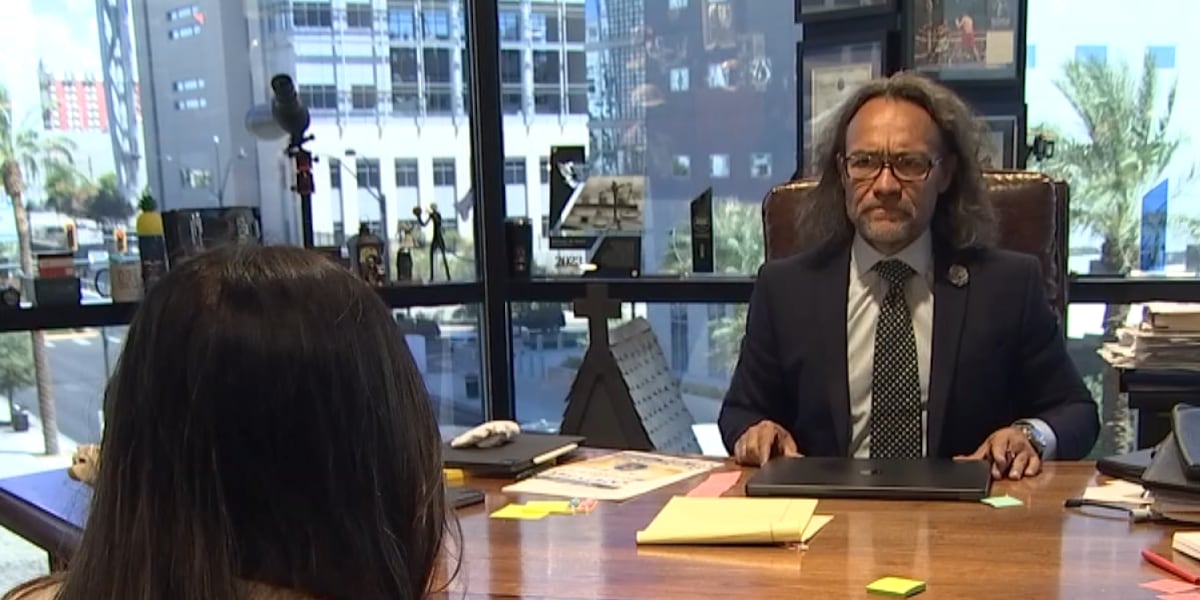
Michael Sanft, who took on Davis’ case four months before trial, spoke with FOX5’s Victoria Saha the day after a jury found Davis guilty of first degree murder.
“Disappointed but prepared for the next step in terms of what’s going to happen when the case has been adjudicated by the court,” Sanft said. “The judge at the time of sentencing will have to accept the judgement by the jury or the verdict at that point, convict him and sentence him. We are looking forward to the next stage.”
Davis has said he plans to appeal.
“Our position has always been that the pretrial motions is where the bulk of the fight was going to be because of the fact that the jury heard evidence that we thought was inappropriate,” Sanft said. “We have always understood that the trial, if we won we were playing with house money, and if we lost we had to appeal these issues to get a fair trial.”
Pretrial motions
Sanft said the defense had sought to have 2008 and 2009 police statements thrown out before trial. Those statements were part of the trial.
“Absolutely,” Sanft said when asked if the outcome would have been different had the recordings been excluded. “But there was also this inclusion of other bad acts that the state was allowed to bring in, like the Biggie Smalls murder and whether or not Mr. Davis was a suspect in that murder. Those are questions that should not have been in front of that jury. In essence, the prejudicial fact, listening to that kind of information and turning out and saying, could have have done this thing, was highly prejudicial.”
Jury deliberations
The jury deliberated for less than three hours, including an hour for lunch, before returning the guilty verdict.
“My problem with it, I believe in the trials that I have done, if a jury is not out for at least three or four hours, it doesn’t go well for the defense,” Sanft said. “The reason for that is the jury has already made up their mind. In a case with this kind of volume and the amount of evidence before it, the jury needed to go through the law, which would have been the jury instructions, and understand what they mean, and then look at each piece of evidence that would have helped them come to a conclusion.”
“So in essence an hour and a half to have a conversation, it’s not enough time to give this case its due and proper consideration,” Sanft said. “So as a result, when the call was made at 4:30 or 4:40, I knew it wasn’t going to go well for us.”
Sanft said he was already on his way home when he got a call notifying him a verdict had been reached.
“Under my rule of thumb, if it’s under three hours, that’s not good for the defense,” Sanft said. “They didn’t go through the evidence. They already made their mind up.”
Reaction to the verdict
“I hate losing,” Sanft said. “I was disappointed because I did not believe the jury gave its proper due. I don’t believe the jury looked through the evidence. I believe the jury walked in with preconceived notions, made either before the trial or during the trial, and not done the thing that both the state, defense and judge had done, which is reserve your judgement till the very end.”
Sanft said pretrial publicity about the case made it difficult to seat an impartial jury.
“The problem with this kind of case is when you realize there’s a lot of attention to it and there’s media coverage before trial indicating that Mr. Davis was going to be in the murder trial of Tupac Shakur,” Sanft said. “I don’t think a lot of people did not know it was about Tupac Shakur.”
Before the verdict was read, Sanft said he spoke to Davis.
“I told him that this was not the end because in essence it’s like watching a movie,” Sanft said. “John Wick, end of movie, he rescues a dog out of a kennel and he and the dog wander off. That indicates that there’s more to the movie, and really in essence this is what this is about.”
Sanft said he has not spoken with Davis since they returned to a room together after the verdict.
“We did talk. We went back to have a conversation,” Sanft said. “It was a thing where he wasn’t emotional about it because he knew this was a likely outcome.”
“It’s one thing to put 10 bucks and lose, but it’s another to come back with a guilty on first degree murder, so yes, absolutely disappointed in the verdict,” Sanft said. “Once again, there’s a long game here. This is not the end.”
Davis’ statements used as evidence
Prosecutor Binu Palal said in closing arguments that Davis’ confessions were direct evidence. Sanft was asked whether Davis’ own words led to the conviction.
“Sure,” Sanft said. “Mr. DiGiacomo pointed it out in one of our pretrial hearings and said if it weren’t for the fact that Mr. Davis published a book and did all these interviews, we wouldn’t be here talking about it because there wouldn’t be a prosecution.”
Sanft was asked to explain the defense’s strategy of arguing that Davis’ own statements about his involvement should not be believed.
“Because that’s the truth. I mean, we are all reasonable men and women in our community and we realize what’s bull and what’s not bull,” Sanft said. “The problem with this case, what the state’s position is, is that his statements to other people is akin to getting up on the witness stand and telling the truth.”
“In this particular regard, yeah, don’t believe him, because you can’t confirm it to be true,” Sanft said. “If the FBI and all the other agencies say we have information he was in Las Vegas, or he does own a white Cadillac, then it’s a whole different defense. But when you don’t confirm and believe the words coming out of a man’s mouth that varies depending on who he is talking to, that’s a problem.”
Sanft said Davis did not testify because of how his out-of-court statements had already been portrayed.
“Once you paint him as someone that’s not trustworthy in terms of what he says, why would I want to put a man like that on the stand,” Sanft said. “It doesn’t matter what he says, and he said enough. What’s he going to say that’s going to be any different.”
Sanft said he still believes in Davis’ innocence.
“Until you tell me something that is a fact and not just his words,” Sanft said. “That man got convicted on his words only. We were always worried from the beginning that the state had something hidden in the volume of discovery that was dumped on us. We were worried that we were missing one thing, the slow-mo video, the car somewhere in the desert in San Bernardino with a fingerprint that would tie Mr. Davis to it.”
“It’s a dangerous slope for anyone to be on, that just because you say something to someone over again, it could actually get you in trouble where you could go to jail for something for a long time just because you say you were there,” Sanft said.
Case timeline and preparation
Sanft said the short timeline before trial may have affected the prosecution’s preparation.
“I think it played a role in the state not being prepared as they could’ve been,” Sanft said. “We never heard from Detective Mogg, who was the primary detective on this case. There were other individuals that the state should’ve called.”
“We took everyone’s resources and folded into four months,” Sanft said.
Asked whether he would have done anything differently, Sanft said no.
“Maybe if I had a psychic sitting next to me to help discern who should be on the jury,” Sanft said. “We had the best team possible in this case, from the motion practice work on this appeal to our investigator to our firm here at SOS Injury. We all did our part. I don’t see what I could’ve done differently.”
Sanft said he is representing Davis pro bono and plans to continue.
“Unless he gets a job in prison and he can afford to pay me, we are locked in this issue,” Sanft said.
The defense did not agree to stipulate to a gang enhancement allegation in the case.
“We could not stipulate or not agree to the gang enhancement issue,” Sanft said. “It doesn’t change perspective here as to what Mr. Davis is facing.”
After the verdict, Sanft said he sat with Davis.
“We were just sitting there taking in the moment,” Sanft said. “He had reminded me this is phase one. Because I was upset with the verdict, I was very disappointed in the jury. Mr. Davis was the one who said, don’t worry about it, man, this is the first phase, and I said, I understand, I hate to lose.”
Davis will be sentenced Oct. 13.
Copyright 2026 KVVU. All rights reserved.